On 15 March we sailed through the Magellan Strait towards Punta Arenas, Chile. Our 16-day cruise to Antarctica and the Falkland Islands, a trip of a lifetime, was drawing to its end. It was a day of activity as we returned our boots and our Leopard Seal group patches – no more excursions for us – and collected a coloured tag to attach to our luggage.
Of course, we ate our fill at the breakfast buffet and the lunch buffet, commiserating amongst ourselves that this would be our last, that the food had been amazing on the MS Roald Amundsen, that we had been taken such good care of.
We had been given our instructions on what would happen the next day. We had to pack our luggage and have it waiting by the main elevators by 10:30pm. Our passports would be returned to us in the morning. We’d head out of the gangway at our allotted times, get on a bus and be taken to the airport. There we’d board one of three charter flights to Santiago.
Glen and I would then spend two nights in Santiago before going to Buenos Aires for three nights before flying home. We’d be back in Perth on Sunday 22 March. Things were looking good.
Yes, the pandemic had caused some anxiety. We had been given the heads-up that Chile and Argentina were looking at their own travel bans but there wasn’t much we could do. We still thought we’d be able to get off the ship.
While we were away, Australia implemented a travel ban and Australians were urged to come home. Which is what we intended to do. It’s what we planned to do. And, for most of 15 March, it was what we were going to do.
But seemingly in the blink of an eye everything changed.
That afternoon we were all summoned to the Explorer Bar for a meeting. The plans had changed. At that point we were still allowed to disembark. I think this was largely due to negotiations that Hurtigruten had undertaken, however, there were new quarantine restrictions.
We would be getting off the ship, but we’d be supplied with gloves and a mask. Our luggage would be taken en masse to the airport and sorted out there. The three charter flight times had changed. We’d be walked in single file onto a bus and driven to the airport, then to Santiago.
When in Santiago we would not be allowed into Chile. We were effectively in transit from the moment we got off the ship to the time we got home. Therefore the flights to Chile would not be staggered a few hours apart but instead days apart depending on when your flight out of Chile was booked. Our hotel accommodation at Santiago was cancelled, in favour of sleeping on the airport floor if required.
To further complicate matters for us, Argentina had closed its borders. We would not be allowed into Buenos Aires and therefore our route home had changed. We looked up flights home. There weren’t many. There was one a couple of days later that would go into Santiago at a cost of $7000 for the two of us. (Little did we know this would be the cheapest way home.) We didn’t book anything, just in case we couldn’t get there.
The entire tone had shifted. This was not the end of a wonderful cruise but the start of a stressful escape. We celebrated the end of the cruise with a talent show from the crew, drank a lot, and went to bed anxious about what the next day would hold, but nevertheless trusting that we would be able to get off the ship. Our cruise was at an end.
Skullduggery is afoot
We woke to an announcement. Had we noticed that we had not yet docked at Punta Arenas? Why, yes! We had. Huh?
It seems that in the middle of the night, two other cruise ships docked illegally and disgorged passengers. This led to riots in Punta Arenas, a hard shut down of cruise ships disembarking, and the jeopardising of all our plans to get home.
There were also corresponding riots in Santiago, thereby making safe passage impossible. We would not be disembarking but instead stay floating just off the coast, rotating around the anchor, an oil tanker on each side of us. The world had gone completely mad.
Onward flights were hurriedly cancelled and Hurtigruten scrambled to find a new solution. To their credit they handled this whole situation amazingly and worked tirelessly to get us home as comfortably as possible. I cannot fault them.
While they figured out what to do, we stayed on the ship. We ate. We went to lectures. We went to the gym. We made the most of it (and thanked God that we weren’t confined to our rooms). But all the while we worried what was going to happen to us.
The appetite for disembarking a cruise ship in Chile soured. Despite our own isolation for 16 days, that was not good enough to allow us to transit at that time. Argentina wasn’t an issue. Would we have to sail up to Norway? Could we go to San Diego? In the end the solution was the Falkland Islands, a couple of days sail away.
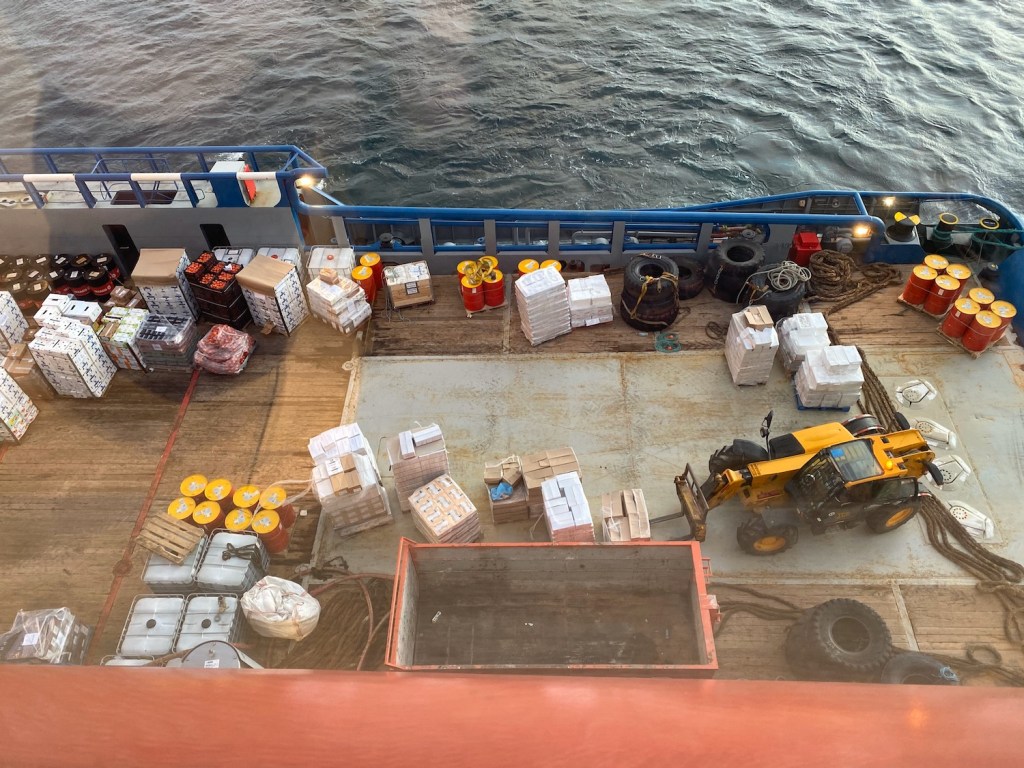
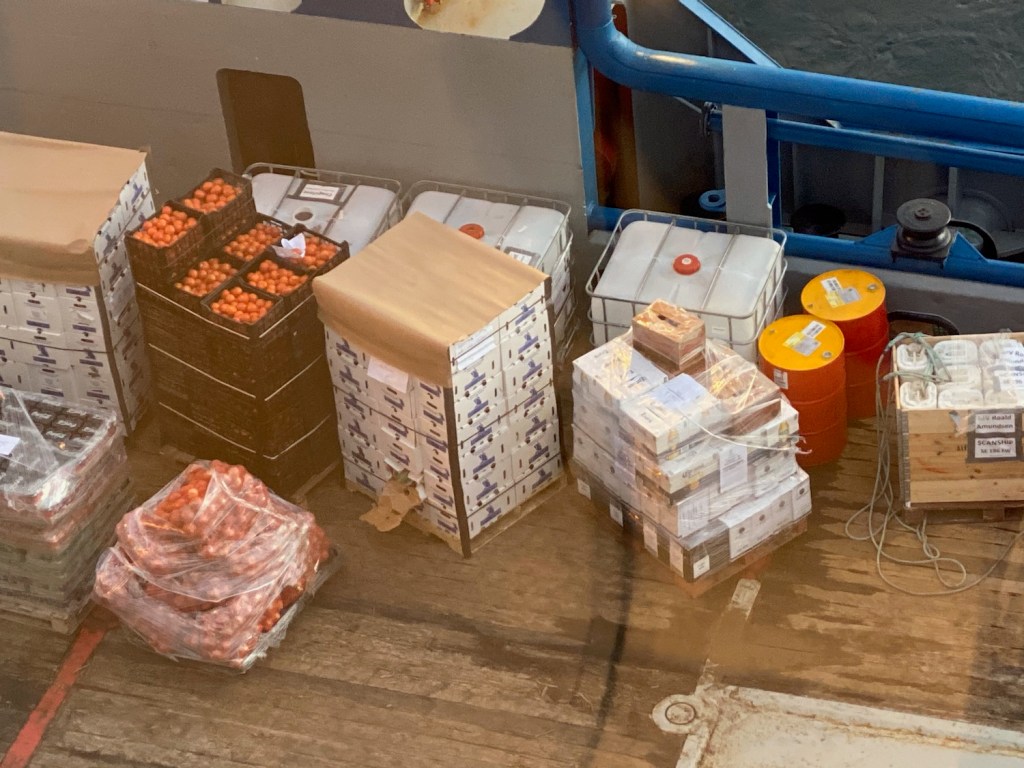
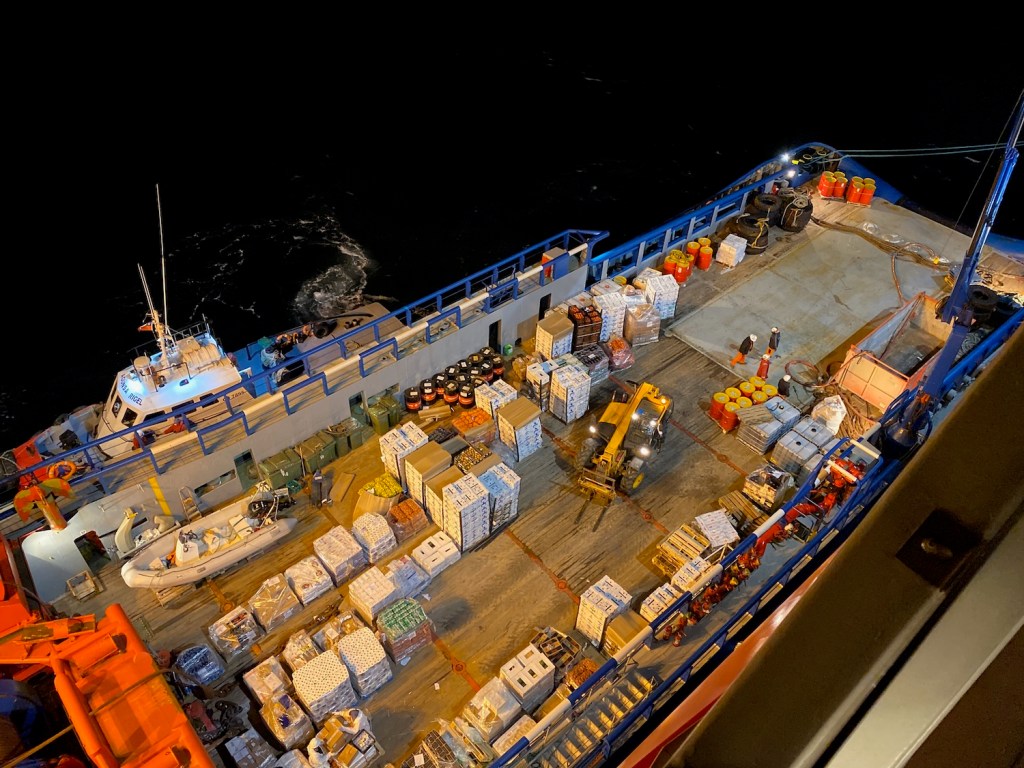
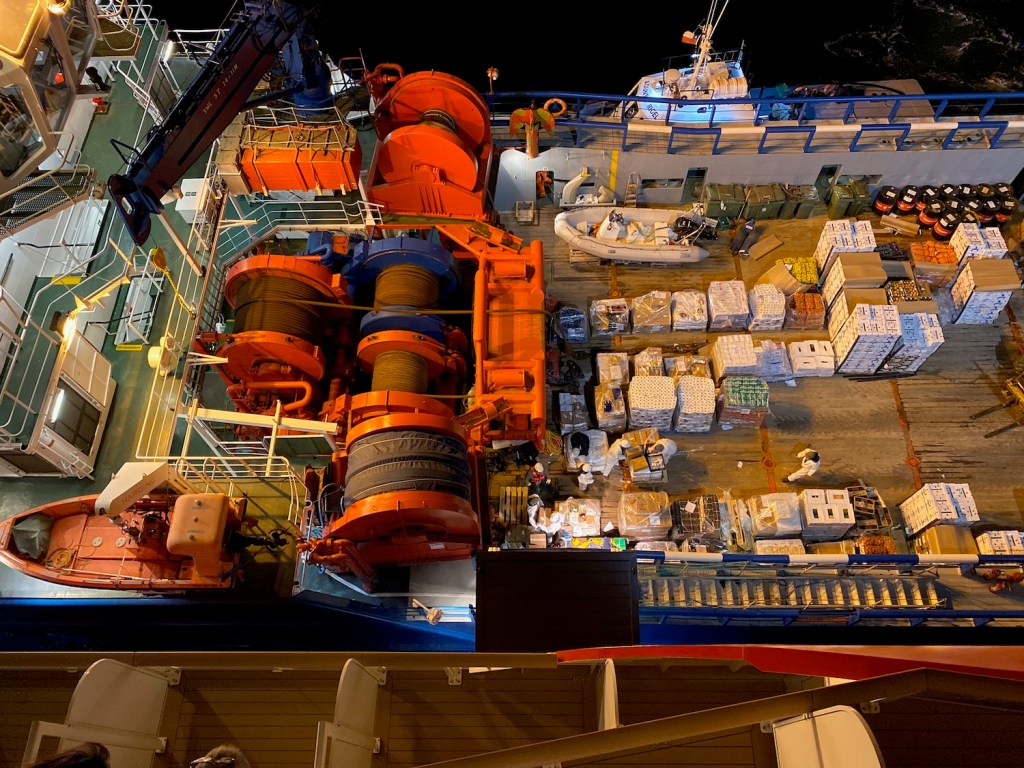
But it took a while to get to that. Negotiations took place with the Falkland Islands government to allow us to dock and then fly out of their tiny airport to another port. In the meantime we had a ship bring us fuel and another bring us the provisions that would have been used on the next cruise if it hadn’t been cancelled.
We watched as this amazing operation took place, as we were barred from certain levels as a large forklift moved crates around on the deck and men worked at least 12 hours to unload all the food and drink and supplies. It was an amazing feat that went through the night.
We were eventually granted approval by the Falkland Islands to return and disembark and fly home. We did, however, have to do some extra days at sea as quarantine, marking 10 days from the time the pilot boarded our ship on 15 March. We could do that. We set sail.
Falkland Islands to the rescue
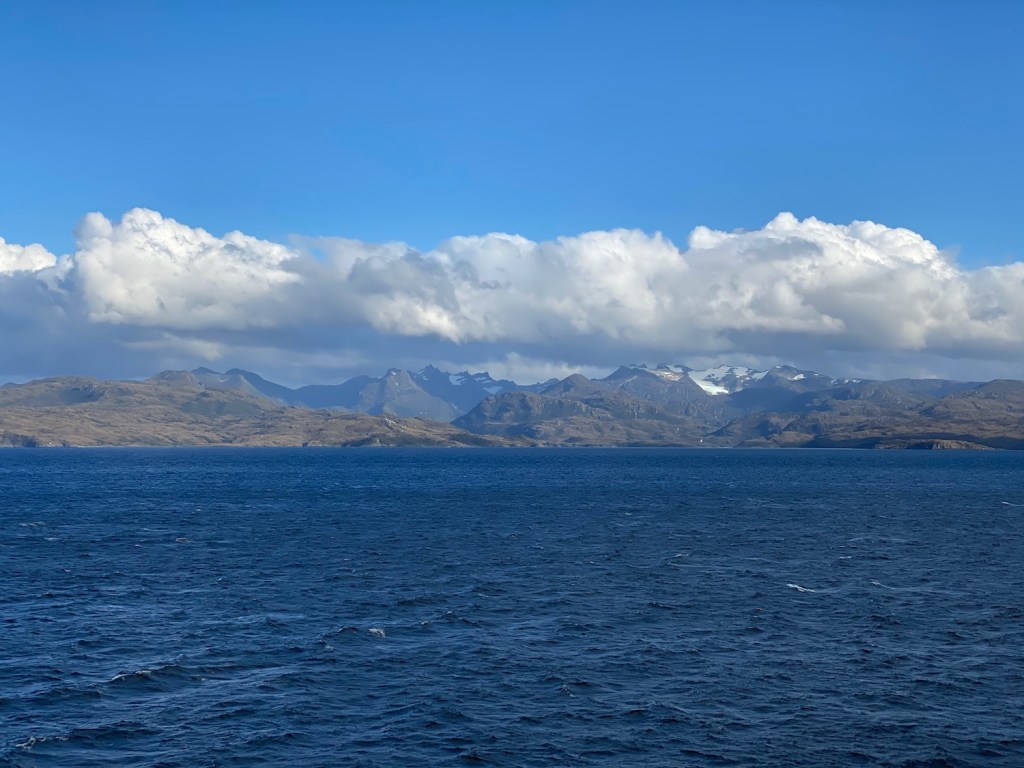
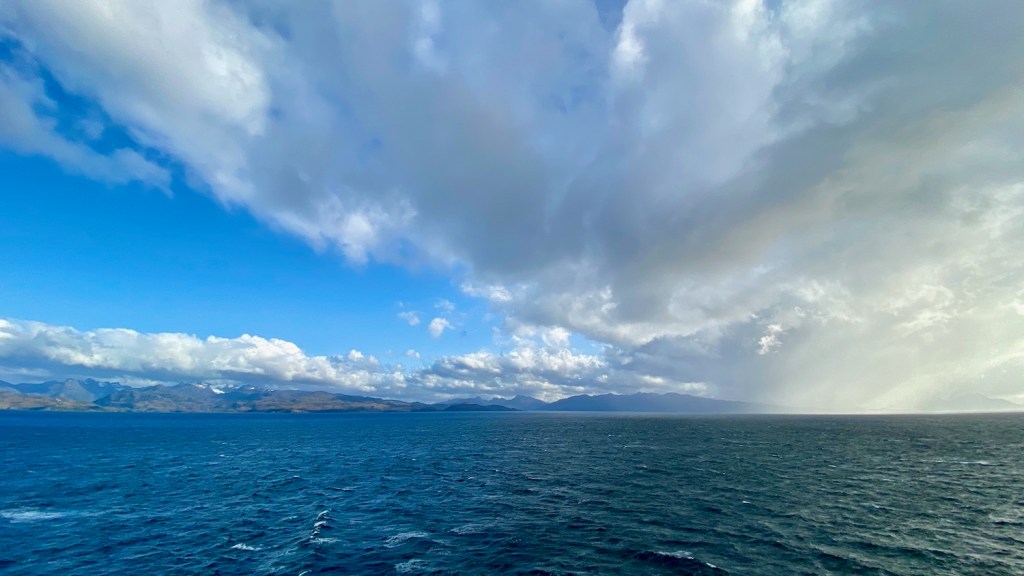
Unfortunately we could not go back the way we came through the Magellan Strait without getting a pilot. Chile wouldn’t give us one and we didn’t want one. That meant we had to travel a similar route to the one we’d taken at the start of the cruise, only this time it seemed to take ten times as long.
We sailed through the Magellan Strait, turning north for part of it, before heading out to the open water. It took at least a day if not longer. The seas turned rough, particularly on one night when there was an international singing evening on Explorer Bar (I was the Australian contingent). The French group (all of them) got up to sing, the waves hit and they went flying, along with a lot of other people. Things were getting rough.
Over the next couple of days I resorted to wearing a scopolamine patch, which I hadn’t needed the first time we did this trip. Any nausea I’d felt vanished but I had two days of trying not to scratch the patch behind my ear. Once the worst of it was over, I took it off.
On our way to the Falklands, we were told more about our escape route, only as much as it could help. We had been dressed down for resorting to contacting influential people back home in Australia, and quite rightly, I think, as negotiations were sensitive. We just had to wait it out.
The plan was to fly out through Sao Paolo and onwards from there but as we neared Stanley, this option vanished. Sao Paolo was not a safe option any longer. They were looking for alternatives.
We arrived at the Falkland Islands but still had three days to wait before we could disembark. Hurtigruten was given permission to take us cruising, which helped give us the impression that we were still moving towards something.
We sailed all the way to the west again. I would have loved to have gone in between the two islands in case there was something interesting to see but instead we sailed around the edge. W had a wonderful time.
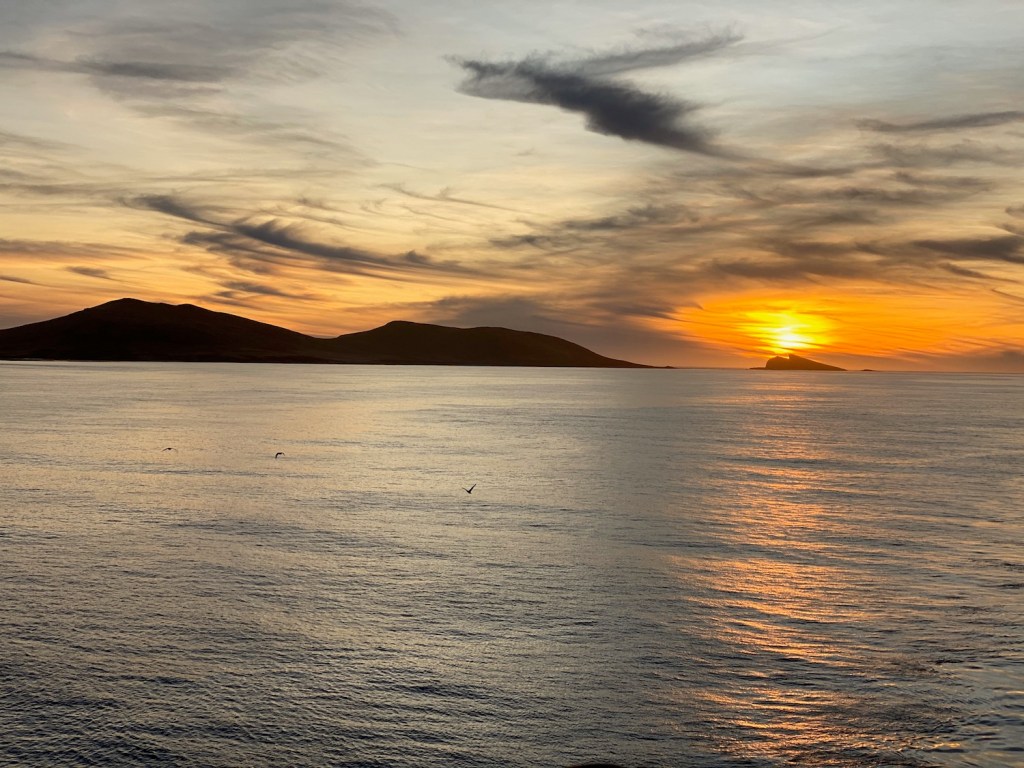
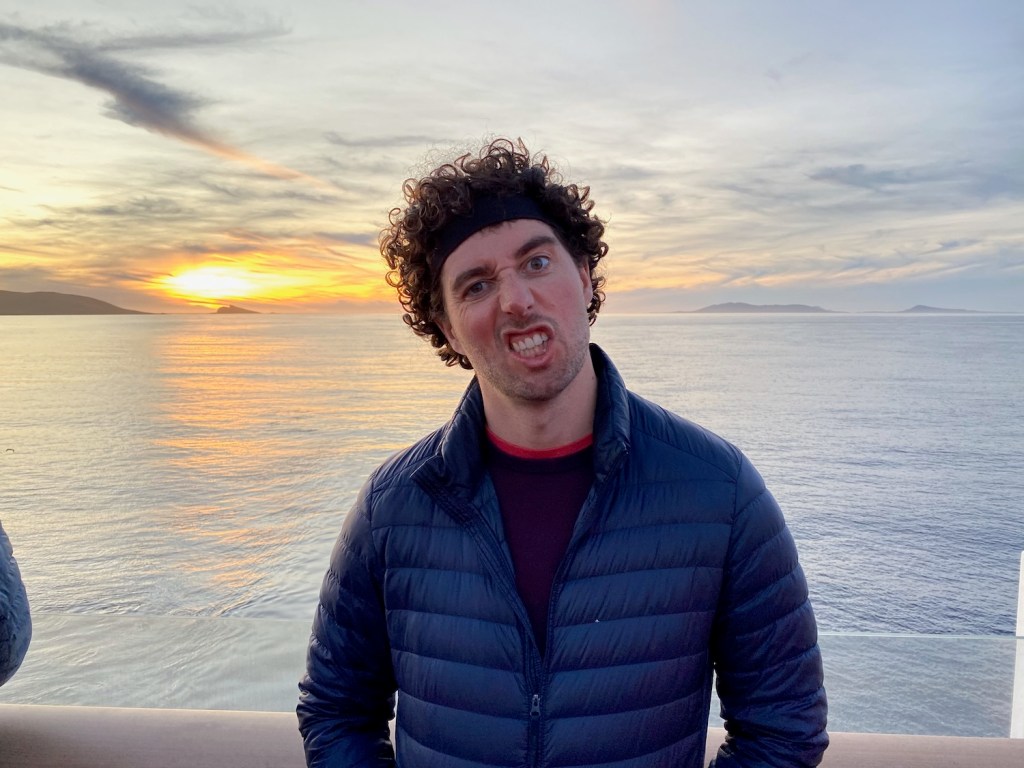
In particular, we went to the Devil’s Nose, a protrusion of rocks with some cliffs and nesting albatross and rockhopper penguins. It was a bright and sunny day, a balmy 10°C. We head out to the deck to look around. We waved at the owners of the island as they stood on the nose waving back at us. We watched whales in the distance and albatross fly up ahead.
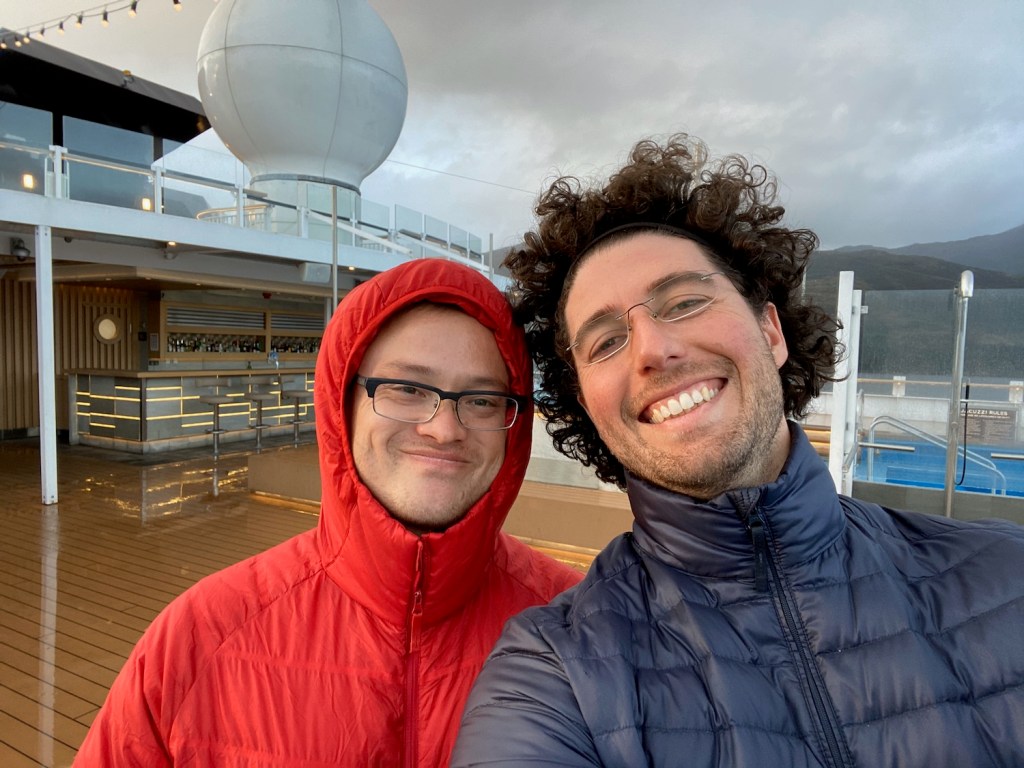
I spent a good amount of time in the jacuzzi and pool with friends. The staff put on a bbq. They put on some tunes. There were drinks. There was laughter. More whale spotting. We all forgot the predicament we’d found ourselves in. It was like we were back on holiday. It was the most surreal feeling. We ended the day with more karaoke and dancing on the deck at midnight.
The next day we sailed back towards Stanley and on 25 March we were allowed to disembark – but only half of us.
Operation Get Us Outta Here
We’d been given instructions on 24 March about how the escape was going to happen. On 25 March, all the Europeans (including the Brits) and about 30 Americans would disembark at Stanley. They’d be taken in one of five buses, starting at 5:15am and leaving every half hour, to Mount Pleasant airport, about 50 minutes away.
There they’d be processed. It would take hours to check everyone in as the internet is very slow. From Stanley they’d fly on a charter plane to Santiago, and from there they’d take various charter flights and commercial flights out, one to New York, one to Atlanta, one to London. They’d then have to take even more flights home, but at least they’d be out.
There were goodbyes on the 24th and a real sense of sad farewell. A German woman had put together a thank you letter and had it translated into French and English, then asked if I’d take care of getting the English one signed by the various groups. This I did and had it ready for handing out at the 5pm farewell.
Overall, I’d managed to keep myself calm throughout all this uncertainty. Yes, there’d been a lot going through my head about what was going to happen to us but largely I had left it up to Hurtigruten to sort out. They had the skills, I didn’t, and there was little I could do. (I did, however, lost it at Glen one day…)
When we went to this final meeting, however, I wasn’t so stoic. The thing that broke me first was hearing that the staff and crew (apart from the Expedition Team) would not be going home. Most of them were from the Phillipines, which was shut down. Instead, they’d be going up to Vancouver with the ship, a three-week journey. My heart broke for them, and I still worry about them now, while writing this.
Every day they kept it together. They put on a smiling face and attended to our needs without complaint. Hearing their stories about their hardships at home – our waitress’s family lives outside Manila, they can only leave the house once a week to get supplies and that takes hours – was heartbreaking.
The other thing that got to me was when the letter was read out to the captain, expedition team and other crew, giving our thanks. Again, thinking about it now, I get tears in my eyes. There was a long standing ovation because without their tireless efforts we wouldn’t have even got that far.
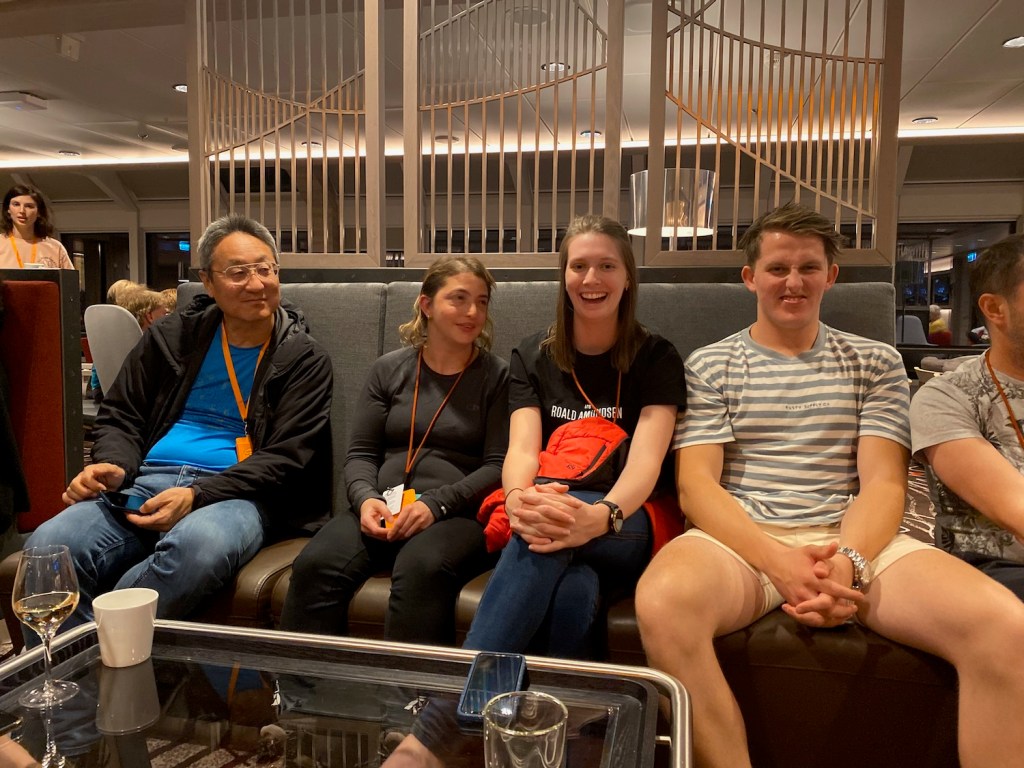
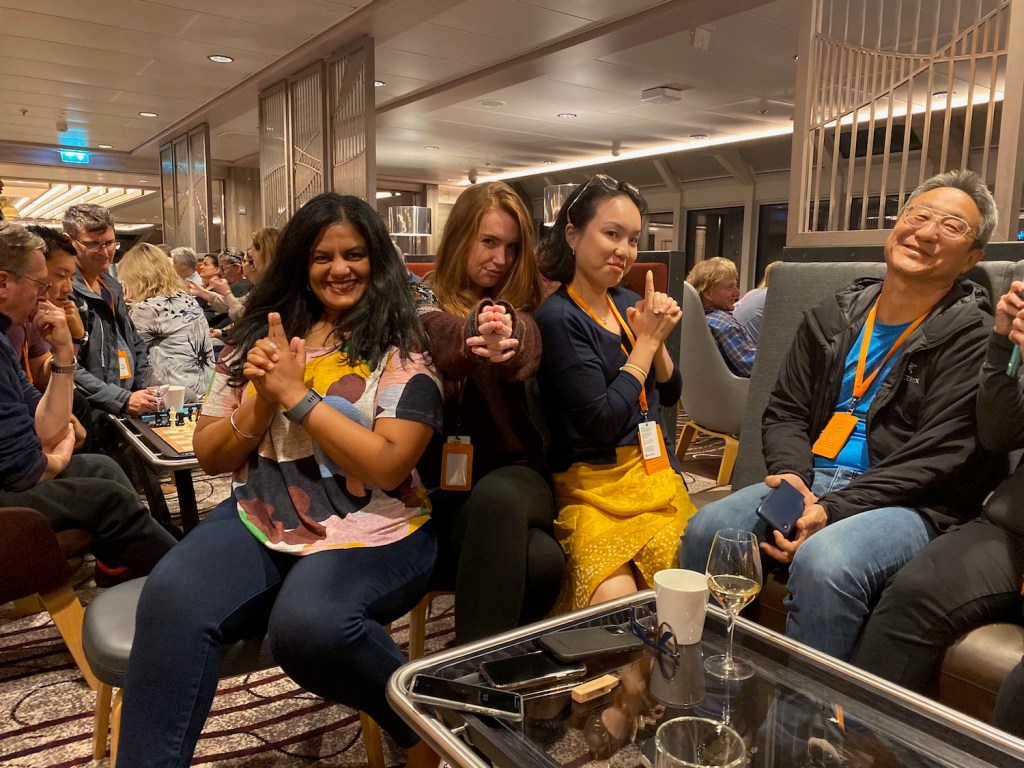
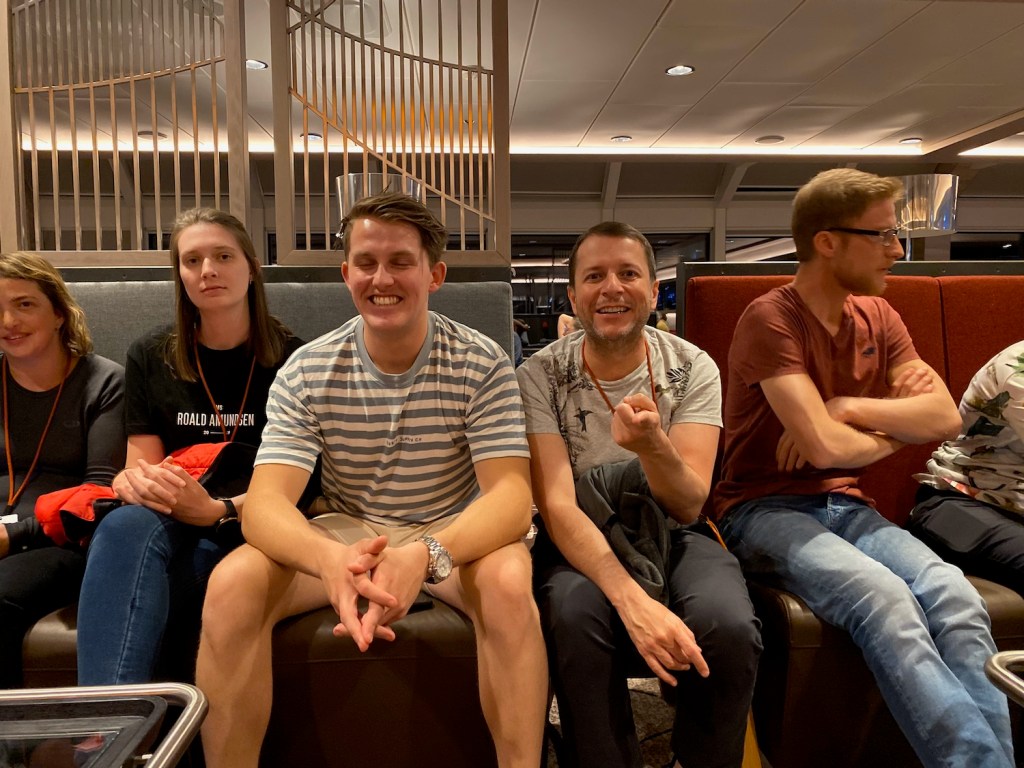
In the evening we had a passenger talent show and the screening of the three videos that were made in the 24-Hour Video Competition. Glen made one about two penguins and a seal that I edited. He won. It was great fun. [see below] We said goodbye to the people who were leaving the next day. This was it.
The next morning we were woken by announcements as people had failed to meet the buses on time so those who were left were rudely awakened at 5:30am. It didn’t help calm matters. Over the next few hours, the first group left, which included most of the Expedition Team. The ship felt empty. We whiled away the day and packed up our luggage and set it out in the evening. One more day…
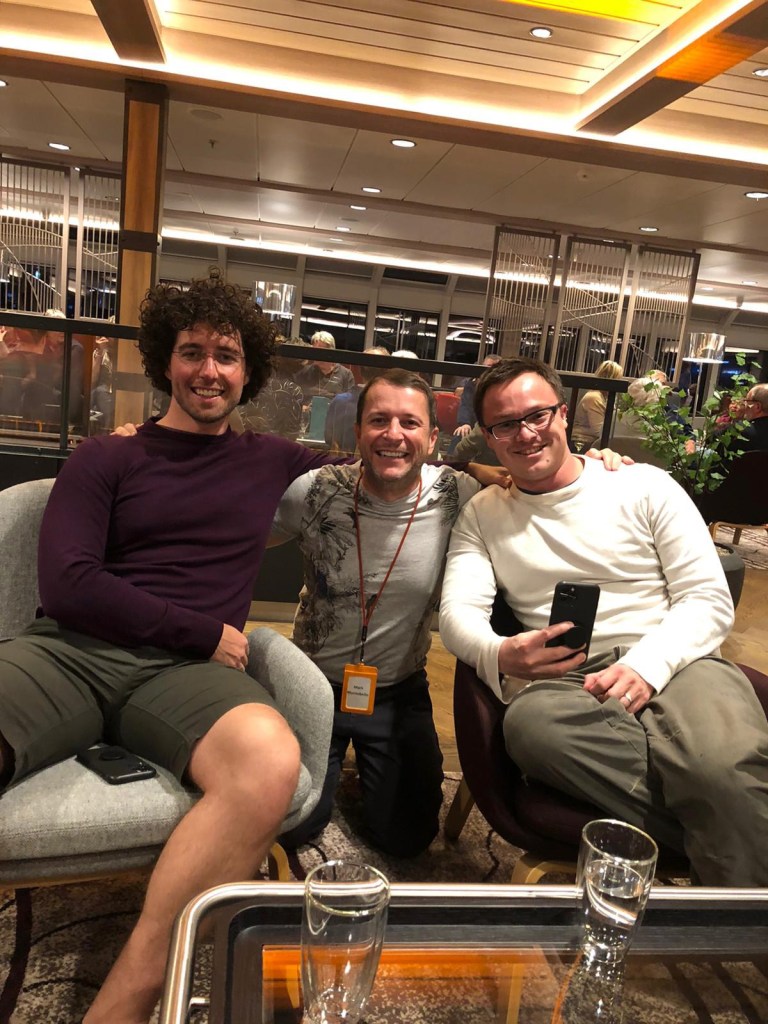
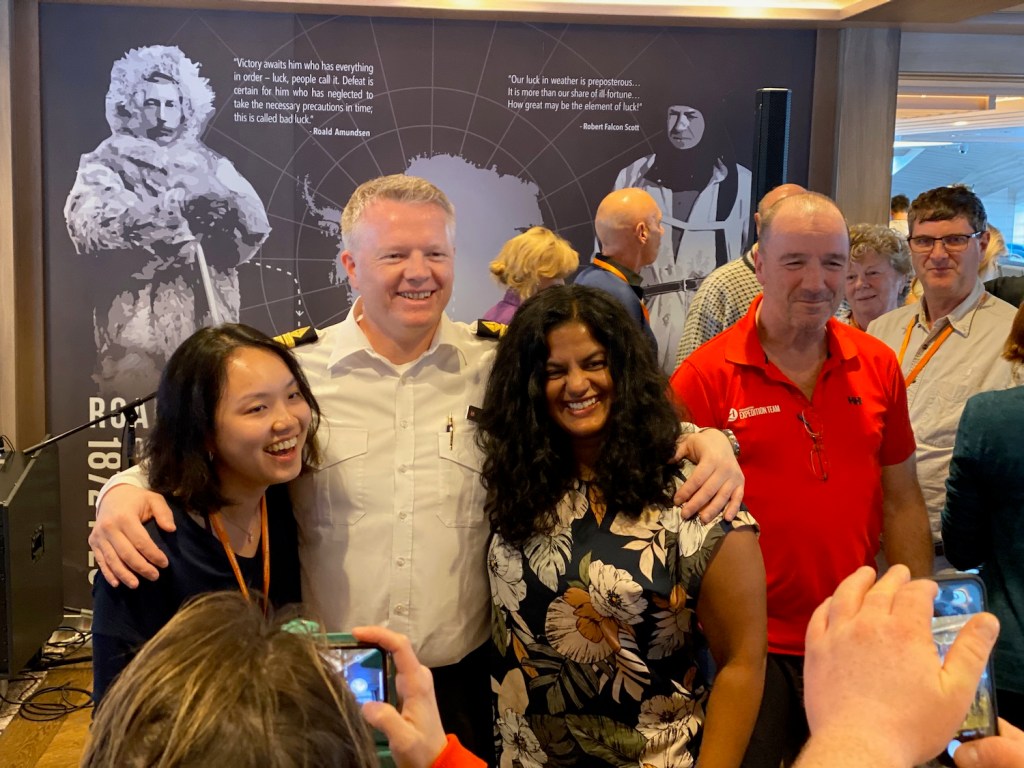
Fly away home
Despite assurances from everyone that we would not be like the first group and delay the first bus (which was even coming later and would be more spaced out than the first group had enjoyed), people still didn’t show up on time. We were again woken up by a rightly pissed off Steffan blaring into our rooms that the bus was there and people needed to hurry up.
Glen and I were on the 7am bus so we didn’t have to rush. We went for a very pared back breakfast and were ready to leave on time. Glen hurried me a bit so I didn’t get to see the captain standing there as he waved us off. That struck me as a sad thing that I’d missed out on.
We climbed into the bus and were given a guided tour of the Falkland Islands by Robin, our driver, as we wend out way to the airport. Having him talk to us meant a lot. In this time of fear, it was so comforting to know that there were people willing to help out, even at risk (no matter how low) to themselves. We didn’t feel like lepers and we were grateful.
There was still a very long queue when we got to the airport on the military base. We found out luggage and joined the line. It took a couple of hours to get to the front, meanwhile bus 4 and 5 arrived. We got checked in and our luggage tagged. We went through to the boarding area.
This is where some things started to go wrong.
While we were sitting biding our time, the processing was still taking place, only time was running out. Despite it being a charter flight, the pilot could still dictate when he left and at about 1pm, he decided it was time to go. About 10–15 people had not been checked in, their luggage had not been tagged.
Boarding commenced. We were taken through. Those people who hadn’t been checked in were told to just go through. They had no seats assigned and their luggage had no identification. It was shoved in the hold. Meanwhile, the plane was chockers. There was no space leftover in the overhead bins so the people at the end had their hand luggage taken from them and put in the hold too.
This would have been fine if we were all going to the same place but from Santiago we would have Australians going to Sydney, Kiwis going to Auckland, and Americans going to somewhere in the US. If their luggage wasn’t tagged…
The plane took off and flew the four or so hours to Santiago. The initial plan, whereby we’d collect our luggage and then have it processed, didn’t happen. That was fine for us but for those going elsewhere not so much.
We landed with enough time to walk through the airport and board the chartered flight to Sydney. The New Zealanders and Americans were taking commercial flights home. We didn’t see them again. We boarded our plane.
There were 2.3 seats (in economy) per person which meant Glen and I had three seats between two. We were given a hot meal (which was actually really nice) and later a breakfast snack, but otherwise we were left alone by the staff.
I couldn’t sleep so Glen slept. I watched Frozen 2, Motherless Brooklyn, and Ready or Not, and managed to get three hours sleep on our 14 hour flight to Sydney. We were almost home. We had a night’s accommodation booked for the night of the 27th at the airport hotel, and then on the 28th at 10:25am we would return to Perth. By 12:30pm we would be in our own home after five weeks of being away.
We were so close…
When the government has a point to make
We landed at Sydney airport at 10pm on 27 March. We weren’t allowed off until NSW Health had decided on something, and then, when we were given the go ahead, we were let off in groups of 50. We collected our things and walked through the long empty corridors of the airport.
Standing more than 1.5m apart were a collection of masked and/or gowned Border Force personnel, security personnel etc, directing us where to go. We’d been given multiple forms to fill out stating where we’d been and where we were going and if we were sick.
We were taken to a station where nurses in masks and gowns and gloves read out information we already knew about needing to self-isolate for 14 days when we got back to our homes. The day before the Prime Minister had announced that people returning to Australia would have to self-isolate at the port of entry regardless of whether they lived there or not. This rule was due to come into effect at 11:59pm on 28 March. We were over 24 hours away from this rule came into effect.
The problem was, however, we’d been on a cruise ship and cruise ship passengers are the new boat people.
We were put into a line and we waited for about an hour while nothing happened. The forms we’d been given about where we’d been and where we were going had been collected and were then handed back to us with a request to add how we were getting to our accommodation/place of isolation. Hygiene had gone out the window. Glen refused to take his back and demanded a ‘clean’ one. This was seen as obstructive. I wish I’d done the same because honestly we had a higher risk of catching Coronavirus in that airport than we had on the ship.
Eventually, we were told to about-face and were taken through to Border Control where we were processed, handed over our forms, and allowed into the baggage collection area. We found our bags (ours had made it, some others hadn’t) and were then directed towards the exit but not allowed to leave.
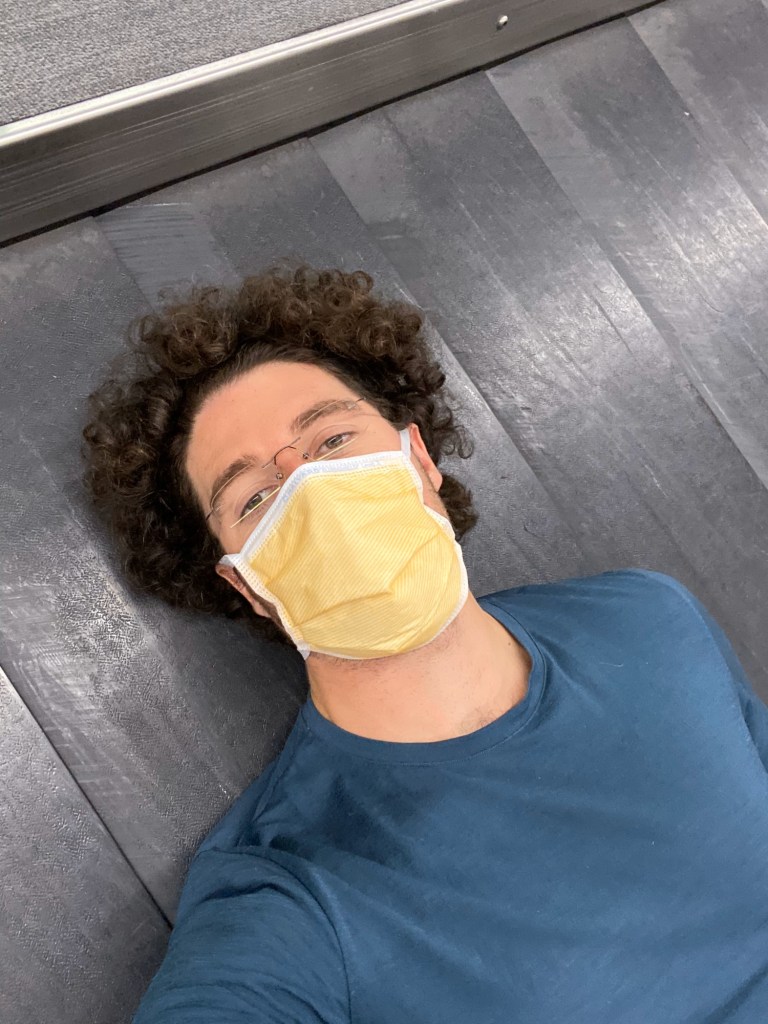
We lined up. We waited. Hours passed. I lay down on the baggage carousel and could have slept. I tried to keep positive but we were again stymied at the last post.
Around 2:30am police arrived. We were told (if we were lucky enough to hear the officer speak as he used no loud speaker) that anyone living within 20 minutes of the airport or who had their own empty transport would be allowed to leave and go home to self-isolate. All others would have to stay the night and be assessed in the morning.
We were given no explanation as to why we were being detained, especially as the new rules did not come into effect until that night. No one said that because of us being on a cruise ship (that had been in isolation for 10 days if not longer) we would be detained. No explanation whatsoever for this knee-jerk decision over the fuck up over the Ruby Princess.
Eventually we were processed by police officers and gave our home addresses. We were told to go one way, and were then given permission to go to our pre-booked hotel over the road and take our pre-booked flight home.
About 40 people, mostly middle-aged and unfit, wheeled giant suitcases out past 20 armed police officers. There was no running. There was no absconding. There was no reason whatsoever to believe that we would not be allowed home the next day.
Missed it by that much
Yes, this saga keeps going.
With little more than four hours’ sleep, at 7am, Glen and I got up, showered, dressed, and went to the hotel lobby to check out and go to the airport to catch our flight home. We were met in the lobby by a police officer who said we had to go back upstairs.
Meanwhile, others in our group had already left, gone to the airport with no inkling that they were about to be the victim of a government demonisation exercise. Some of them boarded their flights and went home. Others were stopped at the gates and taken back to the hotel.
At 7:30am NSW Police served us with a Public Health Order and said we weren’t allowed to leave the room. These orders said we had not followed orders and were a danger to public safety. Seriously.
Our flights were cancelled. We waited for an explanation, getting more and more agitated, more and more angry. A doctor from NSW Health did the rounds, gathering information. He got to us late at night and said he considered us low risk and that we should be allowed to quarantine at home but it would be up to the Powers That Be to approve that.
We had been caught in a political web. Media had brandished us absconders. The NSW Premier and Police Commissioner, as well as the Prime Minister expressed their disappointment. We, and those who’d got away, were being made examples of.
The next day Glen did a round of media, as did some of the others in our group. We were also informed that we would not be allowed to leave the hotel for 14 days. In the evening we were told we would be moved to another hotel (one supposedly better set up for us, an “upgrade” as one frazzled police officer described it, but really it’s so they can better surveil and corral us). The new quarantine orders had come into effect so other travellers would be joining us and had already been taken to other hotels.
We were moved. The new regime was in place. We were served with a new Public Health Order at about 8:30pm, and then an updated one at midnight, served by police banging on our door (and to their credit commiserating with the badly worded order and the way this was all being done to us – I felt for the guy) because the wrong month had been put on the other order. Seriously.
The group, which has been in contact via WhatsApp, has been struck hard by this entire ordeal and the betrayal to their professional integrity. None of disagree with the need for quarantine, however, we do object to thee way this has been handled.
And our complaints about the conditions join those of others in a similar situation. Quarantine: yes. Loss of basic human rights: no.
Governments across Australia have been put into a difficult situation and must do things they never thought they’d have to do to keep the economy going and people safe (yes, that order is deliberate). But as with all governments their propaganda game is on point.
First, they have demonised “cruise ship passengers” and “travellers”, making yet another class of “boat people”. This is to distract from their own inability to cope with these situations without resorting to severe restrictions on freedoms. It also helps as a level of control.
Second, the way the mandatory quarantine has been sold is to repeatedly use the word “hotel” in describing the accommodation. Not all “hotels” are created equal. For instance, our “hotel” does not have windows that open so we get no fresh air. We are not allowed outside AT ALL, which is worse than the rights afforded prisoners.
Governments have gone hard to tell people stuck in “hotels” to suck it up, which creates yet another class of people to demonise. It also ignores the massive mental health impact on these people. I’m in a room with my husband (which is both good and bad) meanwhile some people are alone and others are stuck with their spouse (or not) and their children.
Two weeks might not seem a lot but you only have to look at the posts online about people in self-isolation who are going crazy to see that this is not something that can be brushed aside so easily. Deprivation of liberty does things to the mind.
So to hear that I should somehow be happy with my current circumstances shows a lack of empathy and understanding. Again, I agree with quarantine and self-isolation; not with the heavy-handed manner in which is has been implemented.
There are many other things to complain about in this situation in the hope that they will be improved for others who will have to go through this, but I won’t go into it further. I am also aware of those doing it tougher than I am. I have friends who have Covid. I have friends who are stuck overseas with very limited ways of getting home and in countries that will not be able to cope with the effects of this pandemic. And I have friends who have lost their jobs (or about to lose their jobs), who are struggling with taking care of children while working from home and trying to keep it together. My situation is no worse than most, but it is not nothing.
As I write this it is Friday 3 April and we have another week. I managed to avoid a meltdown yesterday where the thought of being stuck in this room with no fresh air created such a wave of claustrophobia that I was close to hyperventilating. I distracted myself with my favourite YouTube videos. I expect it to happen again.
We have also, so far but things may change, seen that we will be allowed back into WA. The state is implementing a hard border from this Sunday, even to returning residents unless they meet certain exemptions. We, for now, meet those exemptions, otherwise our stay in New South Wales may be extended. We are very fortunate that we have places to go. We do, however, have to do another 14-day self-isolation when we get back to WA – though thankfully it appears we can do this at home. I will not be returning if it has to be in a “hotel”.
As an aside, we have been blessed with family and friends who have reached out to see how we’re doing, and a few of them have brought us supplies. It’s been very reassuring and touching. (We also now have a lot more food than we will probably get through.) There’s also been a lot of camaraderie with our other cell mates, via WhatsApp. It helps to keep us sane.
I may add another update depending on what happens, but if not, assume I made it home safe on 11 April.


What do you say, eh?