The morning of Thursday 12 March saw us pull into the port at Stanley, capital of the Falkland Islands (or Islas Malvinas depending on who you ask).
We gorged on breakfast while the boat was piloted into port, which was a not-so-charming floating pier a 30–40 minute walk outside of the town.
Ravinder, Glen and I got off the boat just after it docked, a novel experience to be going off the boat without getting into a zodiac first, and decided to walk into town rather than wait for the shuttle bus.
We walked along the waterfront, getting a glimpse of shipwrecks and sea birds, before descending into this most British of towns.
About 3300 people live in the Falkland Islands, an archipelago of some 778 islands, but most people live in Stanley which is on the main east island.
That being said, the main centre of Stanley is quite small and you can walk through most of it in no time.
We had worn far too many clothes, opting for thermals under our trousers, along with shirts, jumpers, jackets and raincoats.
The temperature was only meant to be about 9°C or so but there was wind so it was difficult to gauge. The walk heated us up and we were sweating by the time we got to town.
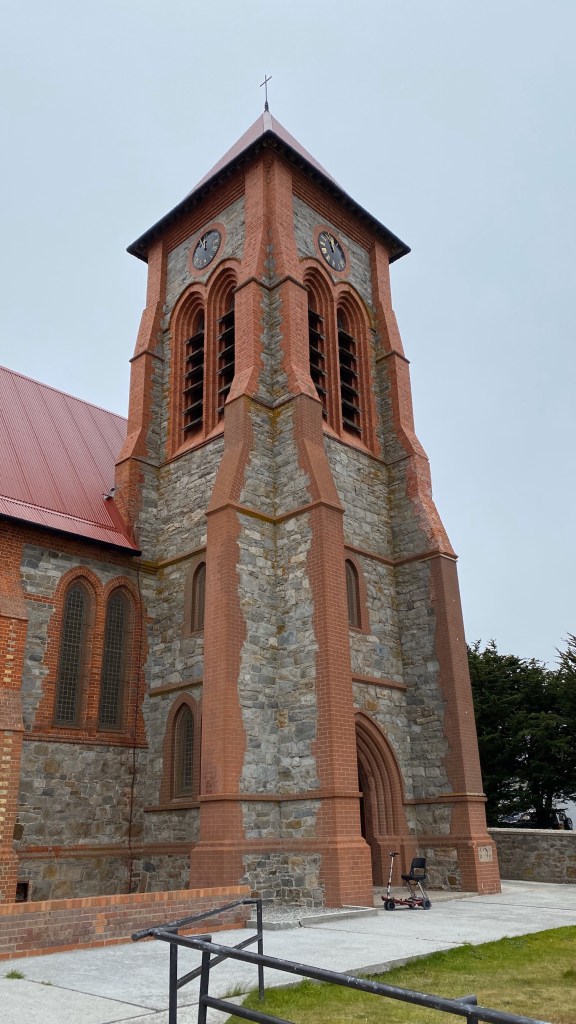
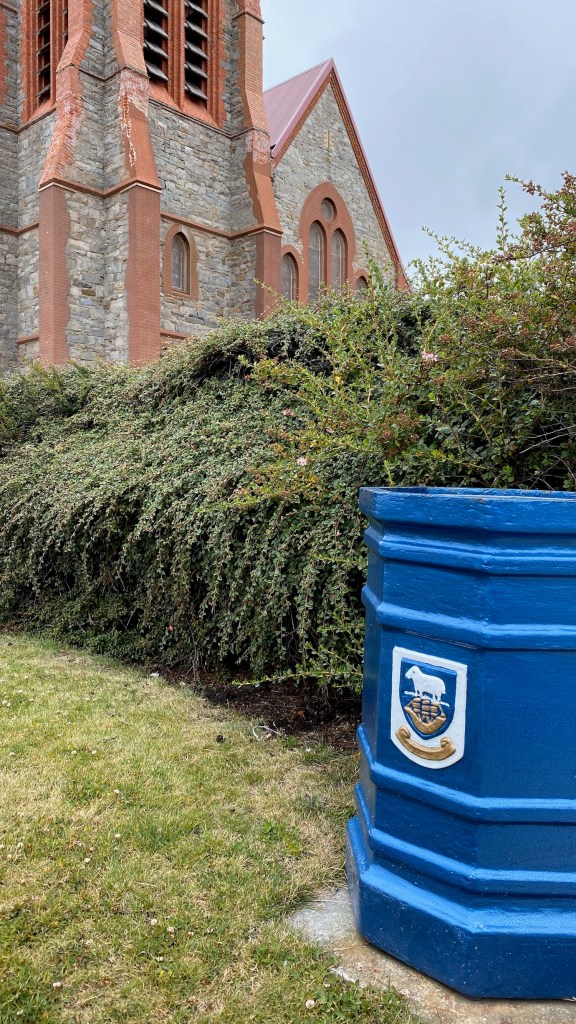
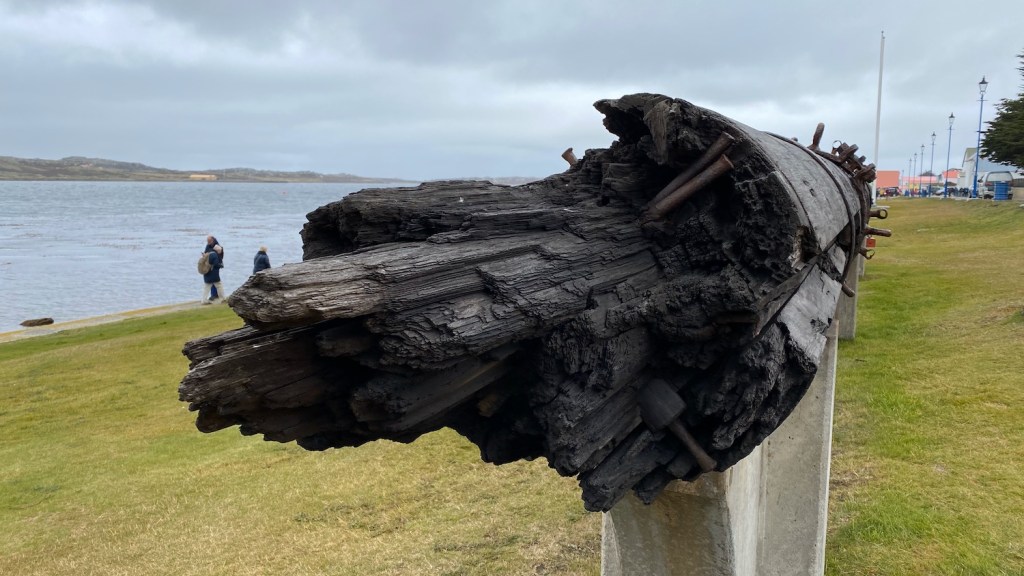
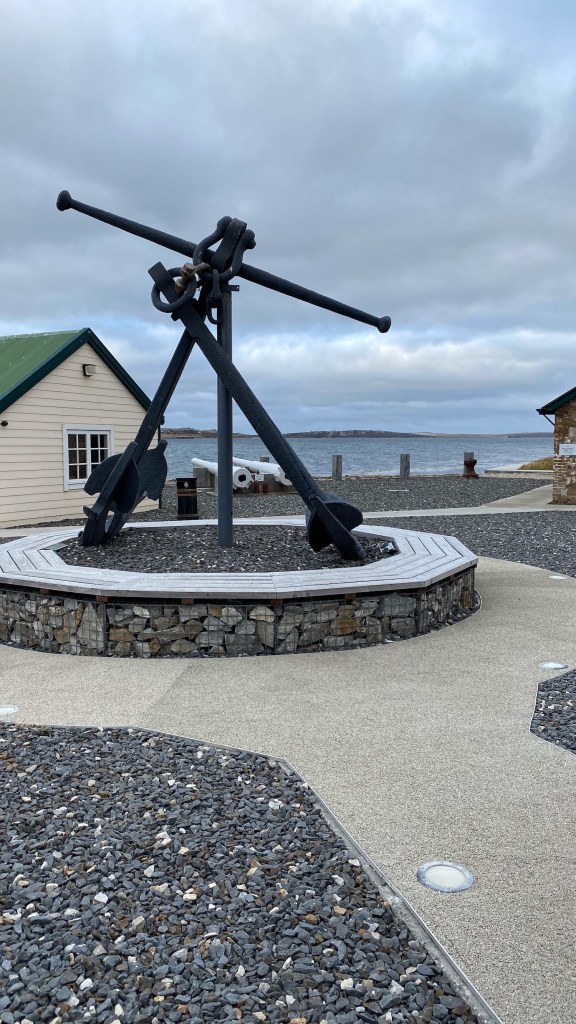
We saw half of the main attractions including the villas, Christ Church Cathedral (the southernmost cathedral in the world), the whale bone sculpture/monument, a mizen mast, and the dockyard museum (though only a small amount).
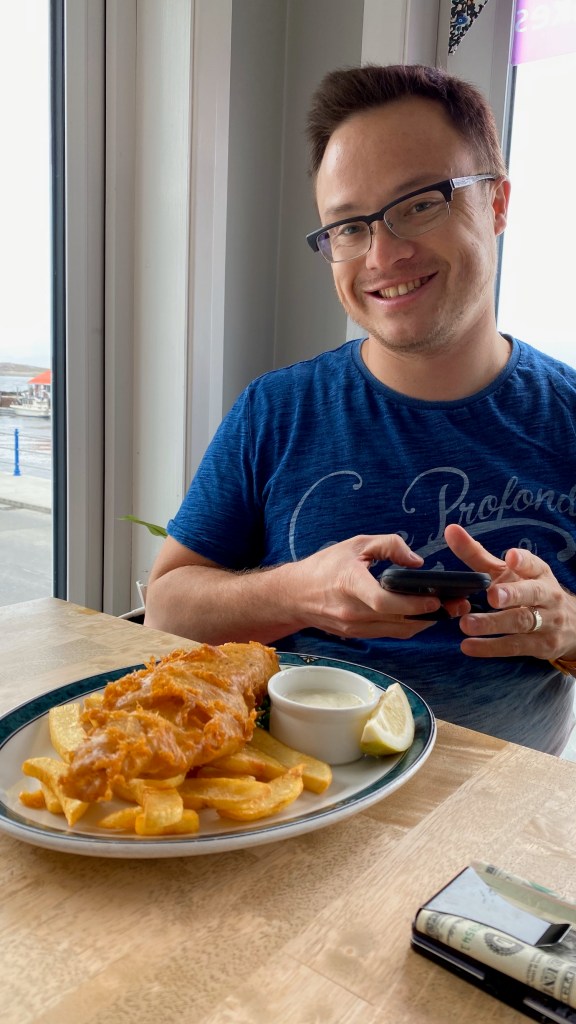
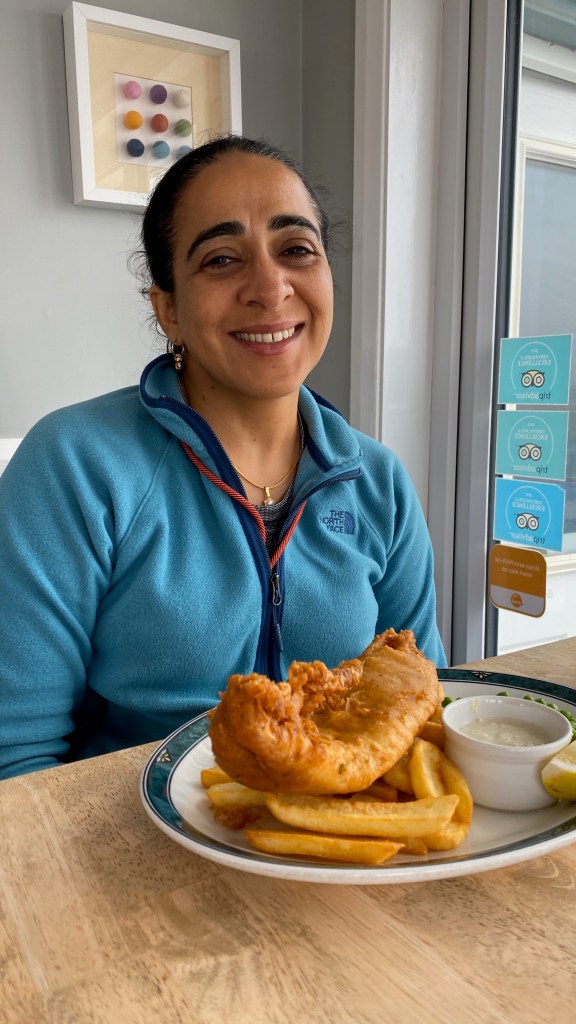
We also dutifully bought souvenirs, some postcards, and then, because we had to back at the pier by 1:30 for our guided nature trek, we went for fish and chips.
It was really good. Along with a local Falkland Islands beer called Cape Pembroke.
Narelle joined us then as she was getting off the ship early and making her way back to Australia to work. She’d hired a 4WD and came to meet us, but no sooner had we seen her than Glen and I had to hurry off to catch the shuttle bus.
We got on. It went towards the pier. It ‘broke down’. We had to walk the last ten minutes.
Nevertheless we made it in time, stripped off our clothes, and got ready for our nature trek.
Trek Walk to Gypsy Cove
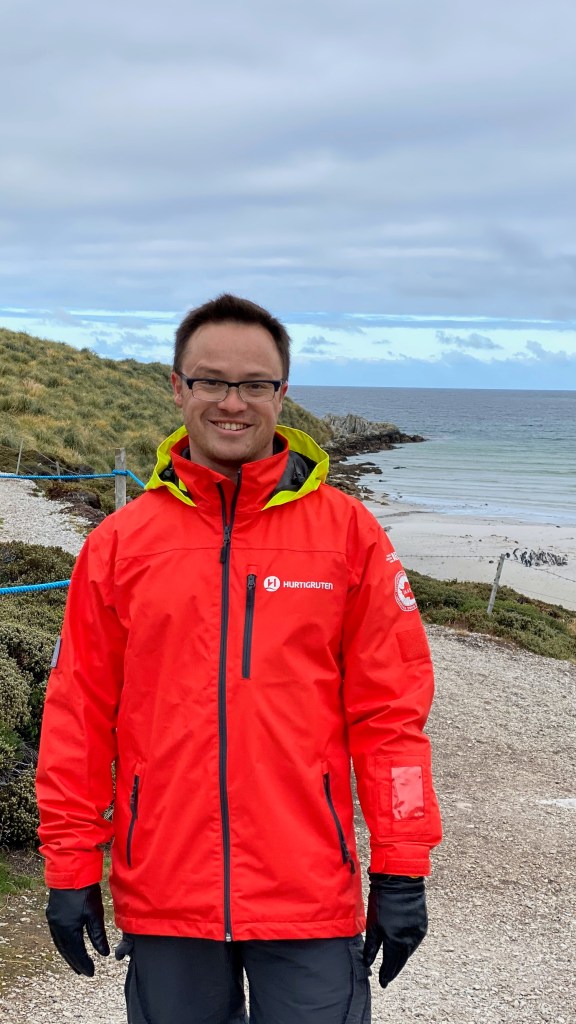
Sixteen of us piled into a minivan and were driven around to the spit of land that takes you to Gypsy Cove where we were met by our guide for our three-hour long nature walk.
We had expected something fast paced and strenuous but unfortunately there were lots of stops along the way that stretched for a while, and in a blowing wind, Glen and I soon got cold.
We had not chosen correctly.
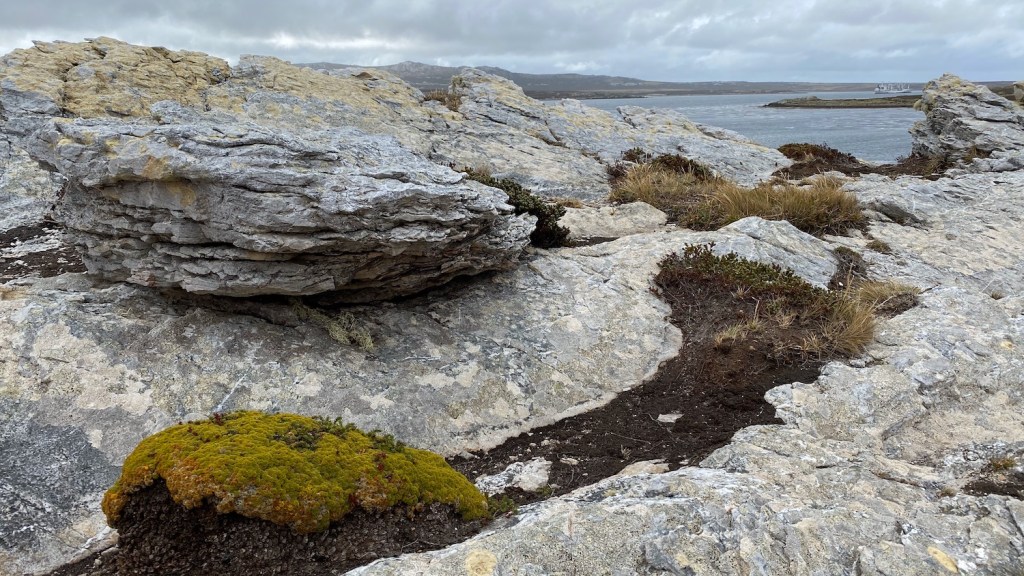
The guide pointed out almost every bird and plant, which I thought was quite good..
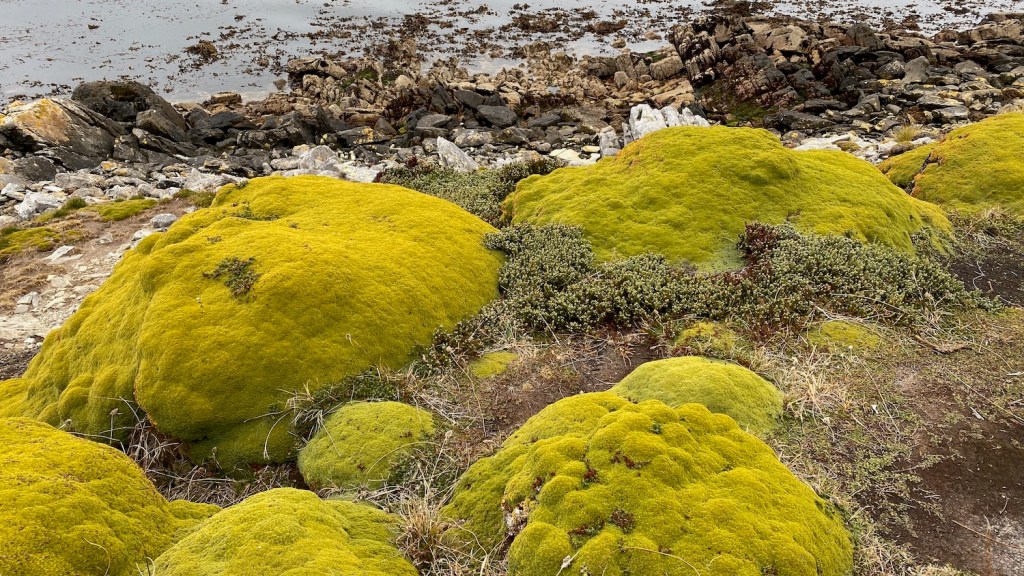
A few of the plants we encountered were edible so I had a jolly time sampling the native flora including a couple of types of berries and this one weedy looking plant that had a citrus flavour.
Plenty of birds around including something called a tyrant, as well as oyster catches, ducks and vultures.
There’s also this bird called a Steamer Duck that can’t fly but instead flaps its wings so they spin around like the wheel on a steamboat as it scuttles along the surface of the water.
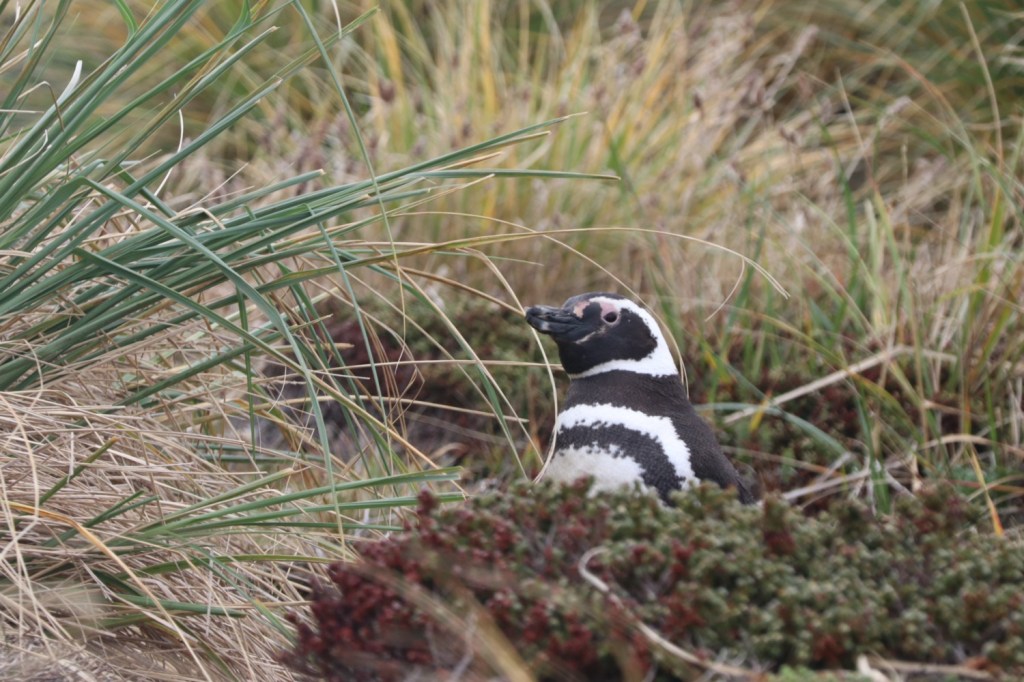
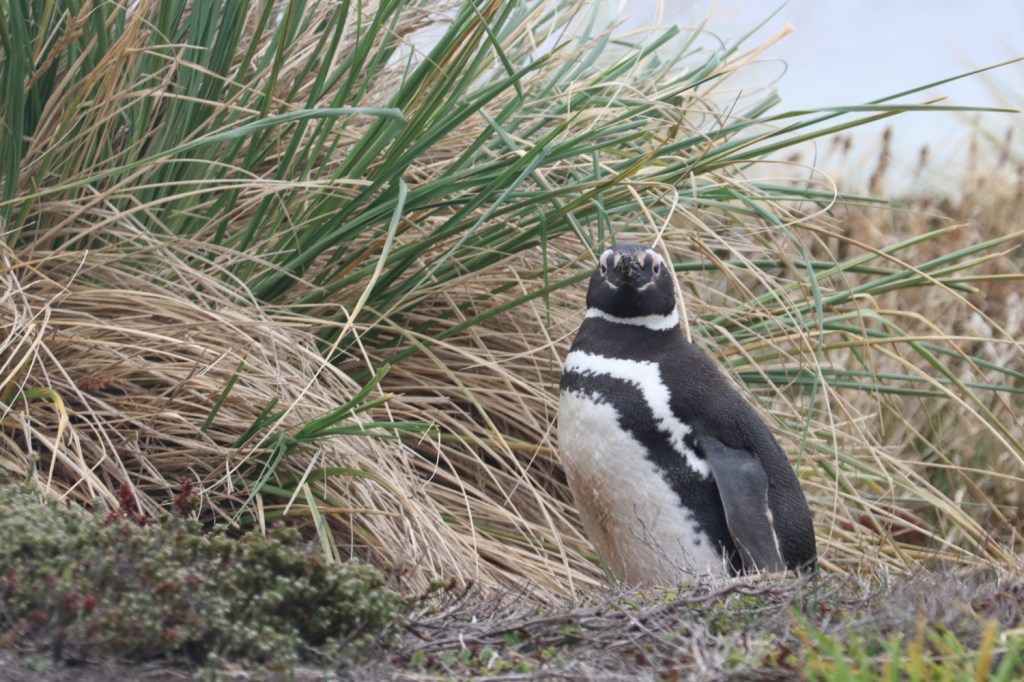
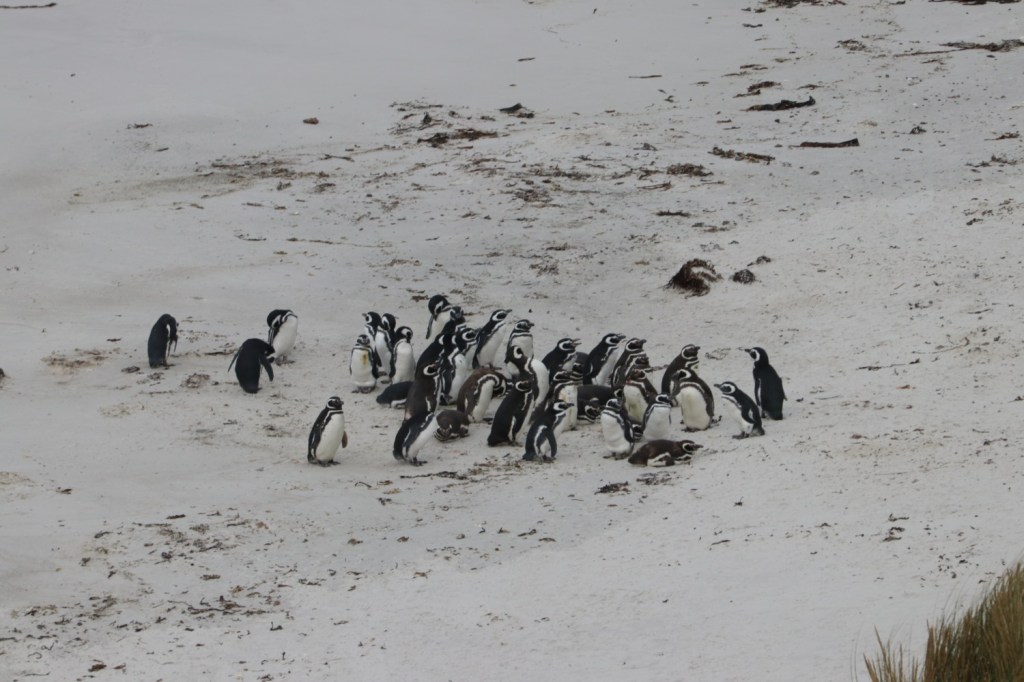
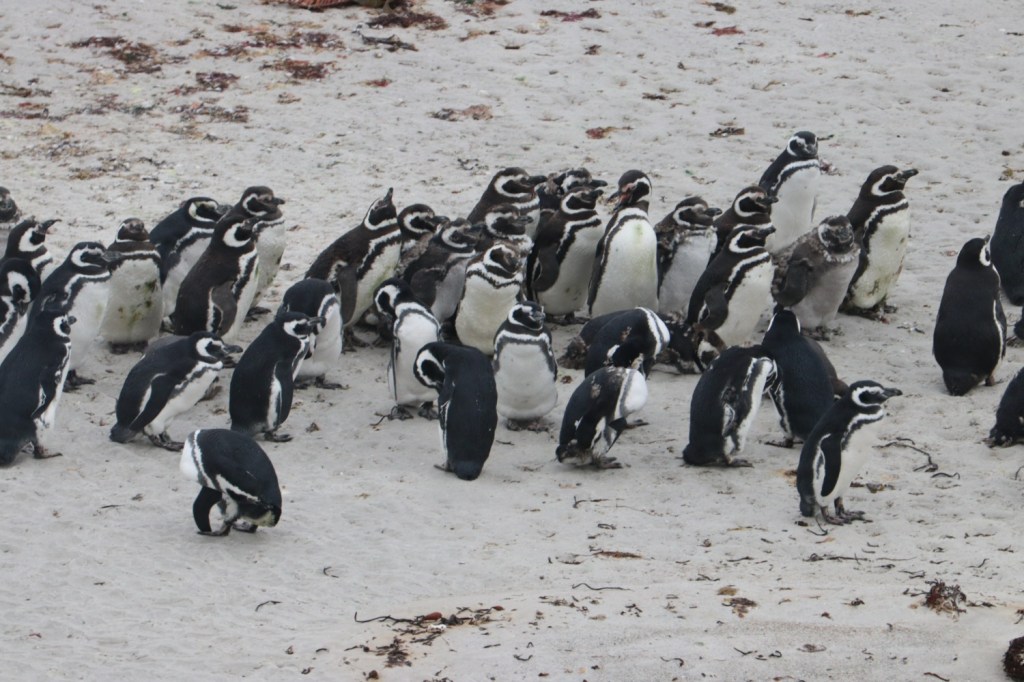
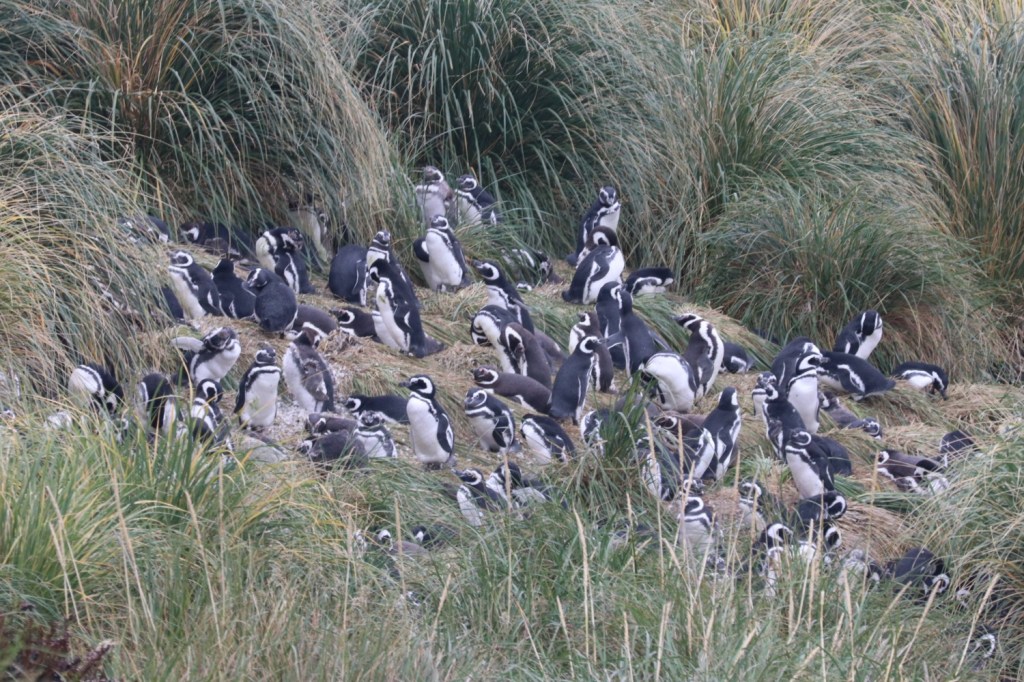
The main attraction though were the Magellanic Penguins.
Luckily the trek was structured as it was because if we’d started with penguins, we all would have wanted to go home after that.
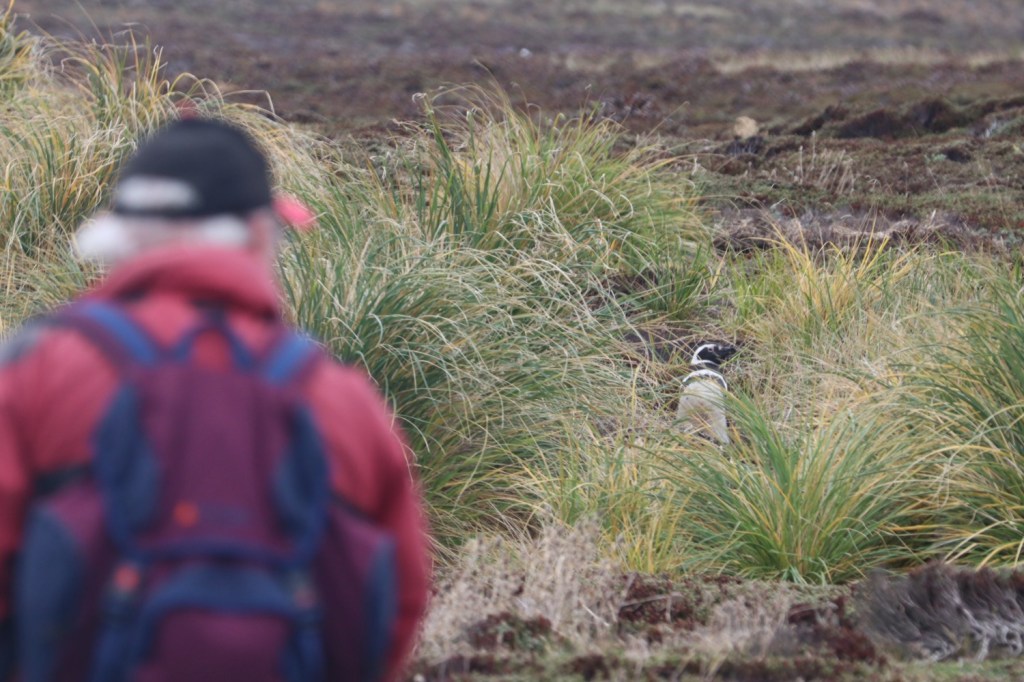
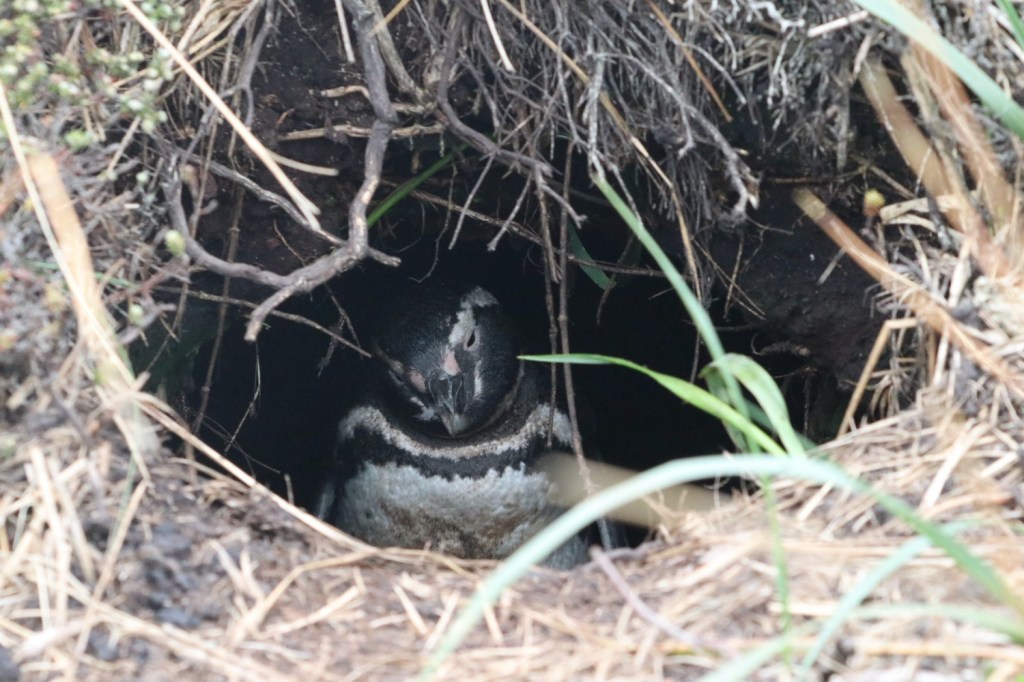
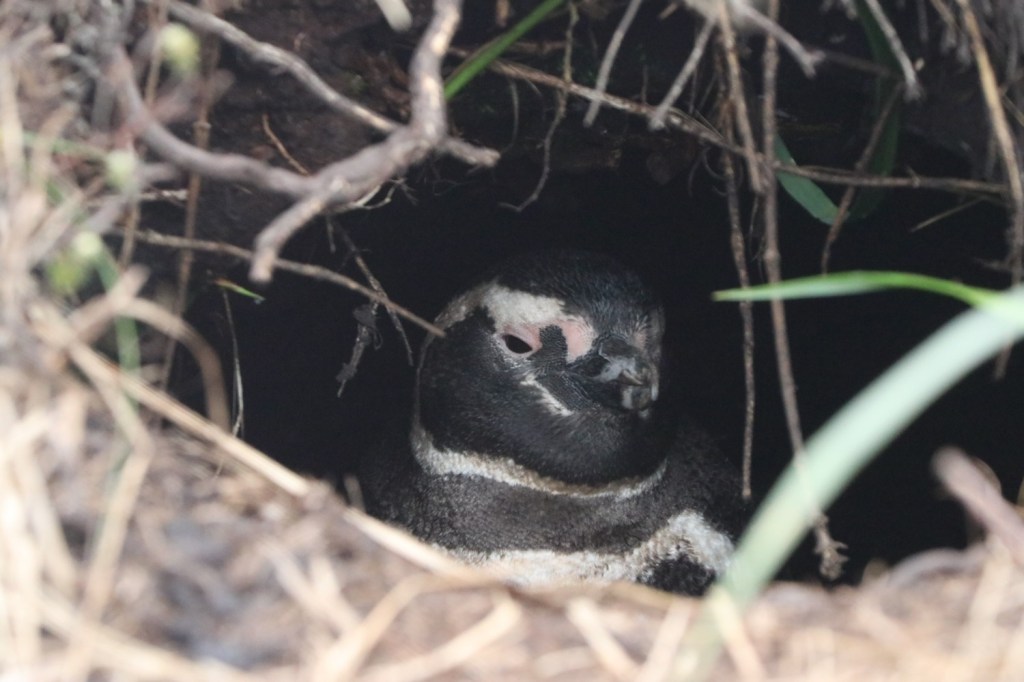
We saw a solitary Magellanic Penguin near one beach as it poked its head up from the clumps of grasses, but once we saw one, we soon saw more — and this time they were in their burrows!
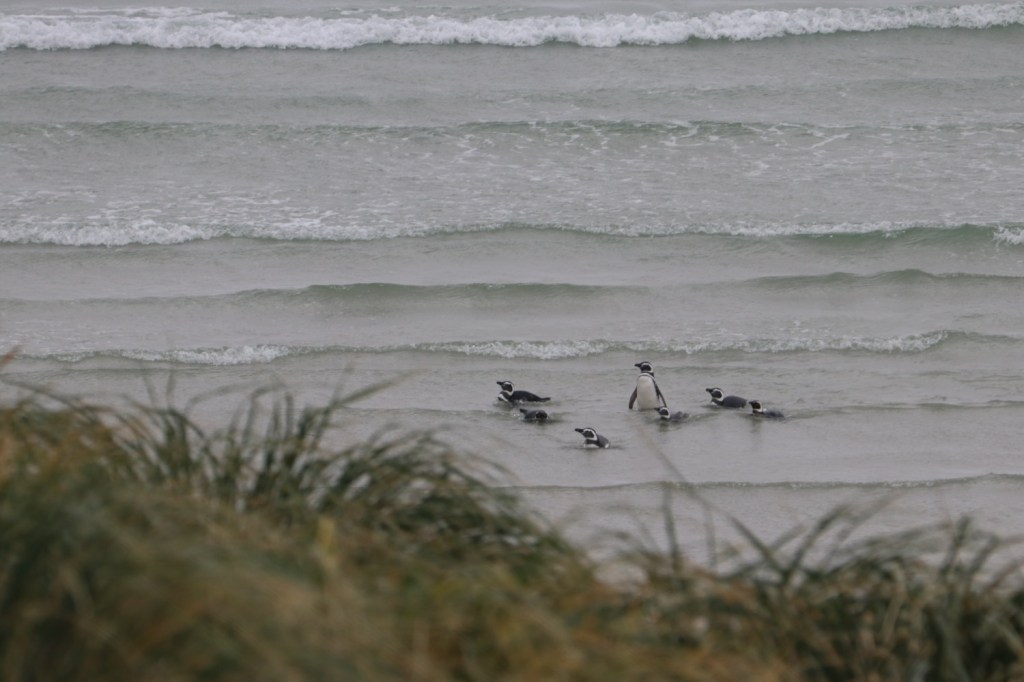
We then made it around to Gypsy Cove where there would have been at least a hundred of them hanging out either on the beach, in the water, or sheltering on the rocks.
A surfeit of penguins!
We couldn’t go down too close because the beach had been mined during the 1982 War and they were still being cleared.
We were assured that the penguins don’t set off the mines as they’re tank mines and the penguins are too light; however the occasional cow will explode.
Thankfully Gypsy Cove had public restrooms, a welcome sight for Glen and I as there aren’t many trees on the Falklands (not native ones at least) and we couldn’t find a big rock to go behind.
The bus arrive soon after and we were taken back to the ship.
In hindsight it would have been just as good to go with Narelle and Ravinder to Gypsy Cove by ourselves (and a LOT cheaper) but then we wouldn’t have gotten to eat so much of the native plants.
Stepping into Stanley
Narelle and Ravinder were waiting for us at the ship when we got back so we all piled into Narelle’s Range Rover and zipped into town.
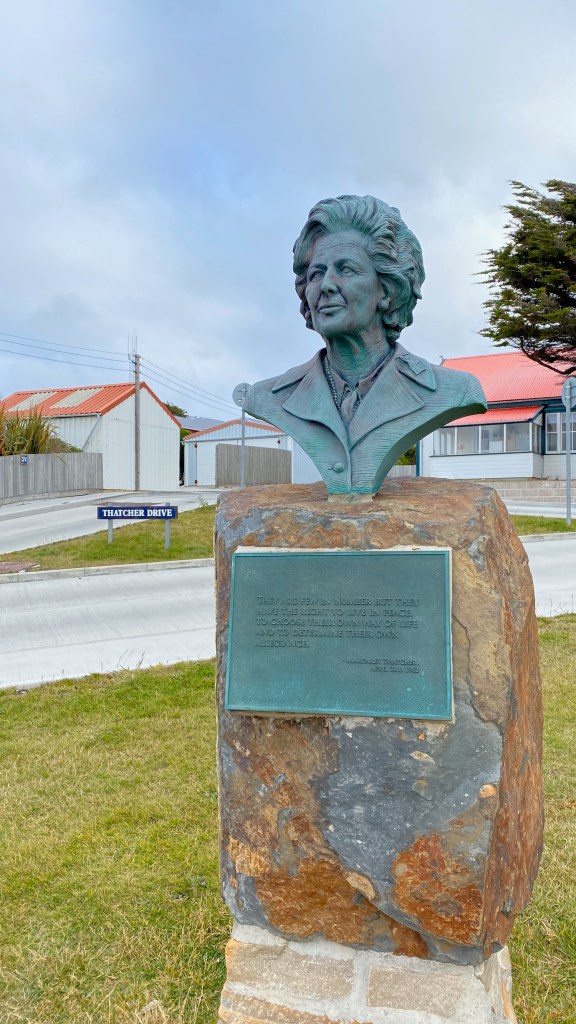
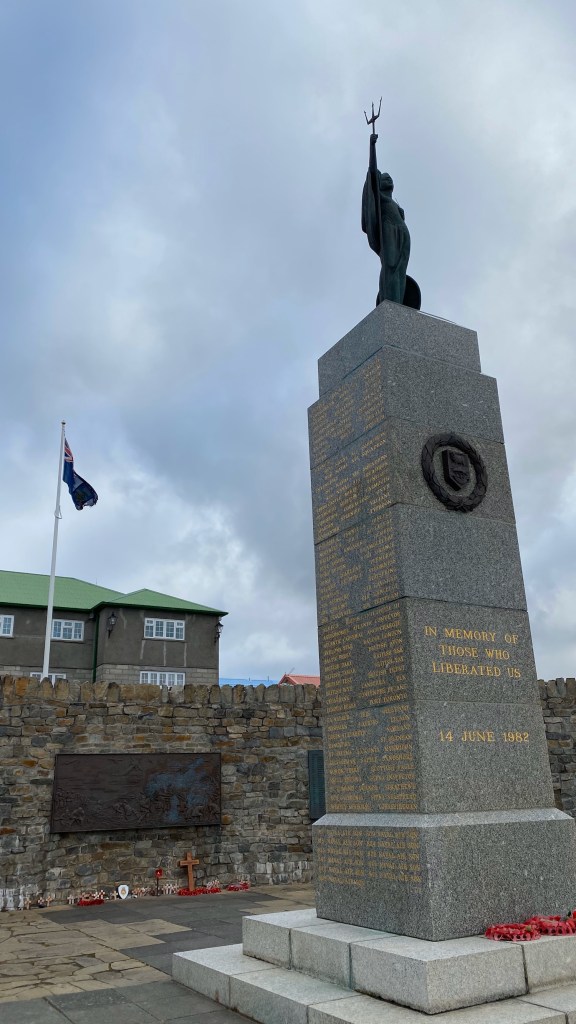
We checked out the 1982 War Memorial and the statue of Margaret Thatcher on Thatcher Drive, then went to the Dockyard Museum for a look around.
The exhibition about the war was excellent, told with the stories and voices of the Falklanders who’d lived through it.
After the museum (and buying some more souvenirs), we went to a tavern in an attempt to get some Falkland Island gin (the distillery was closed already) but they’d run out so we had to settle for Gordons.
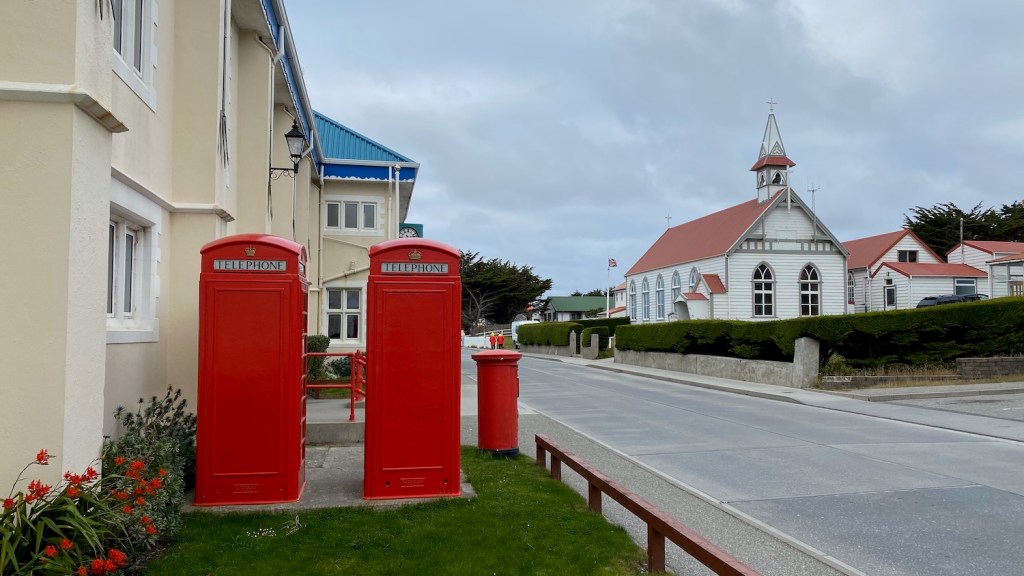
The pub looked much like a pub in England, and really, overall, the whole town and the islands look so quintessentially British that if you’d been plonked there with no information, you’d think you were in dreary Old Blighty.
It’s bizarre.
After our £2 gin and tonics we returned to the ship for dinner. Actually, that should be Dinner with a capital D.
We started in Fredheim (the street food concept restaurant) where we had dumplings (and Narelle and tortillas and a roll-less lobster roll.
After that it was time for the buffet in Aune where I seemed to eat a lot, including dessert.
The others weren’t keen on the desserts so we opted to go back to Fredheim for their crepes and milkshake.
I did not need either but I had both.
And they were delicious.
And then the head chef for the ship wandered through and clocked us as having been in both.
The next day when he presented on the ship’s galleys and stock, he mentioned a few times about people going to both restaurants during the same sitting.
Luckily, none of us were in the room for this lecture (we watched from the safety of our rooms) but we felt very seen.
After dinner we bid farewell to Narelle, seeing her walk off the gangway and stand on the pier waving at us from the safety of the red phone booth stationed there, and when the ship left, she ran along the side waving (much to the consternation of at least one passenger thinking someone had been left behind).
Our little foursome was now down to three members for the final few days of our trip.


What do you say, eh?