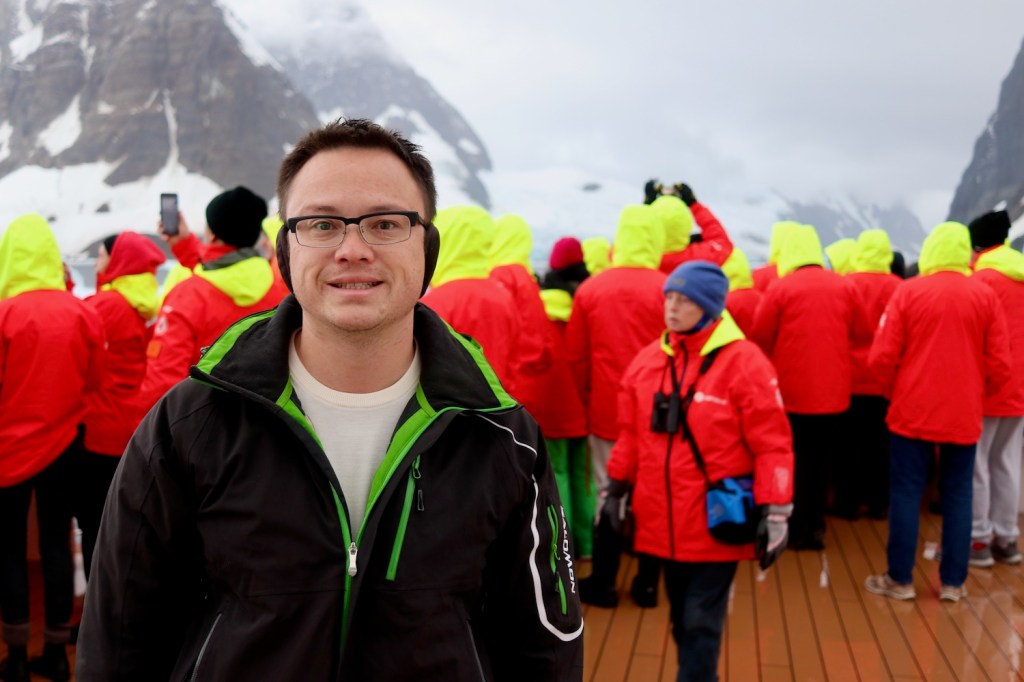
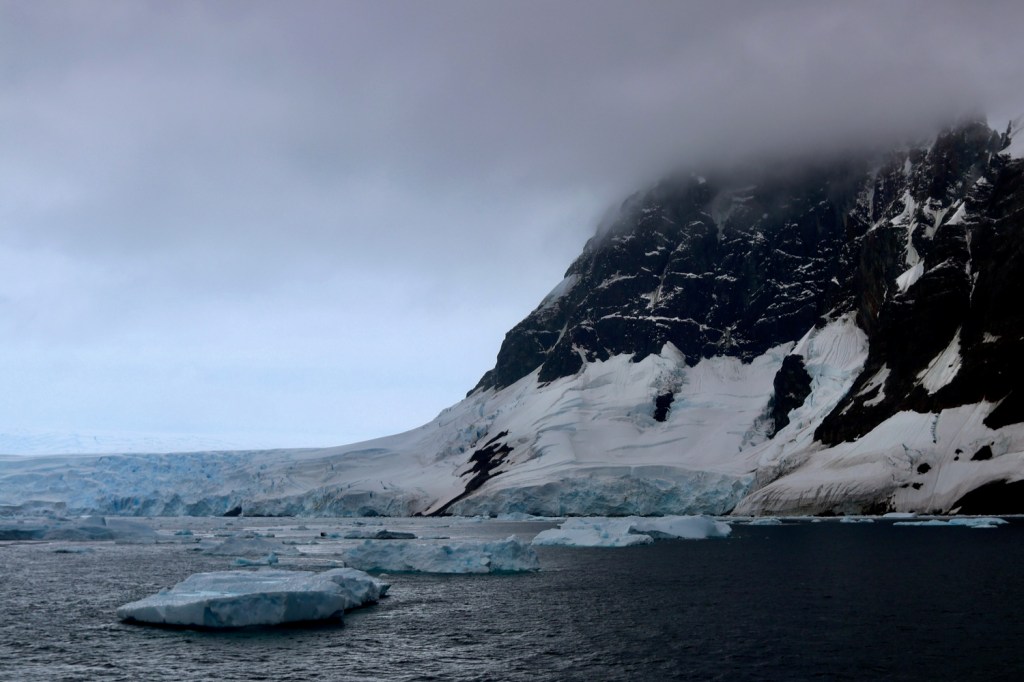
We got up early on 5 March to watch as the ship passed through the Lemaire Channel towards the day’s landing at Vernadsky Station.
The channel is sometimes open and sometimes closed, measuring only about 1600m across.
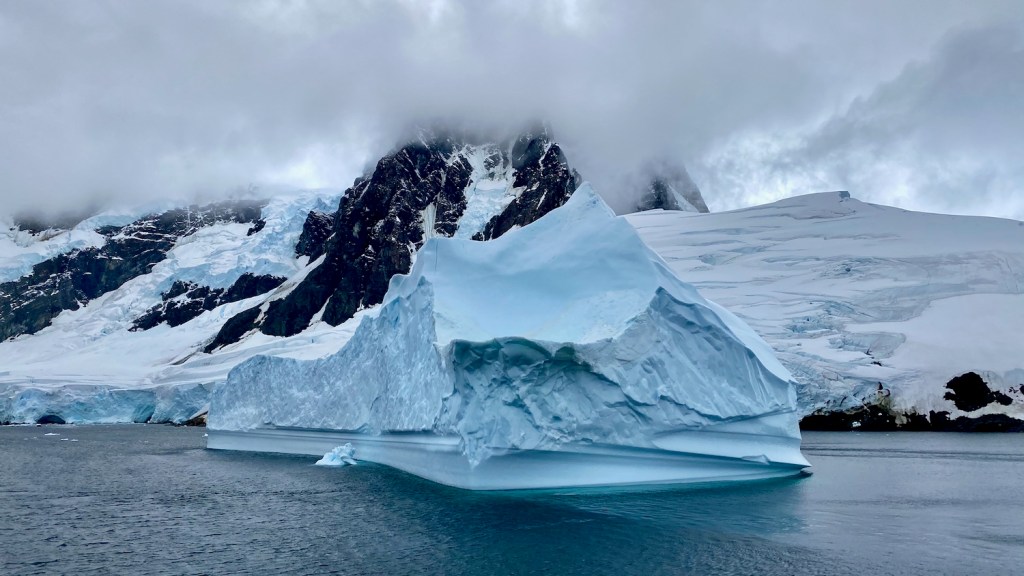
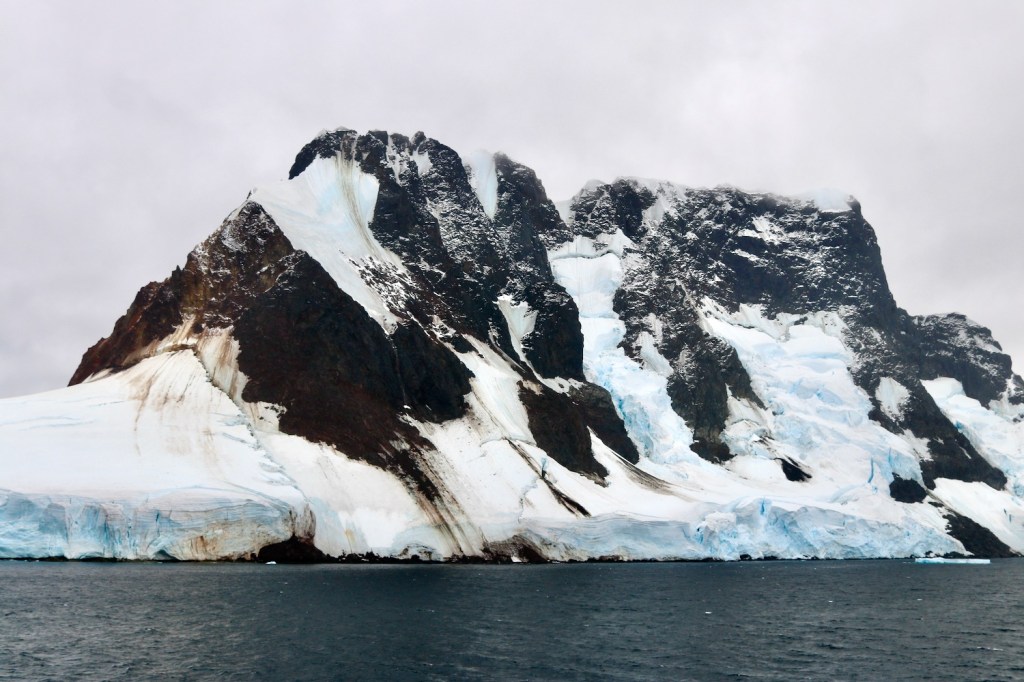
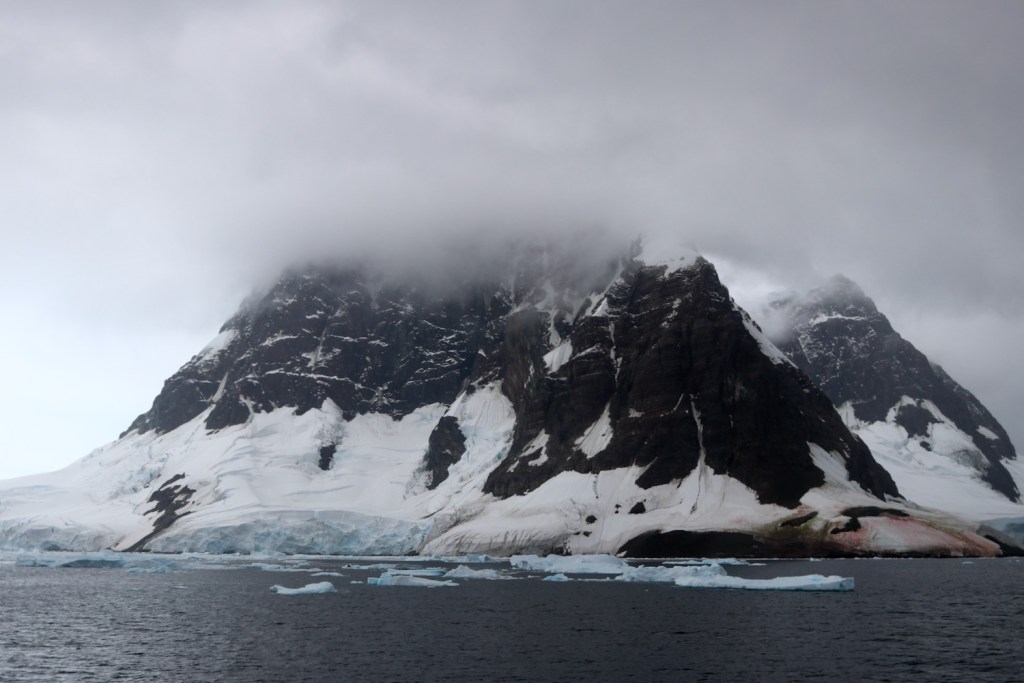
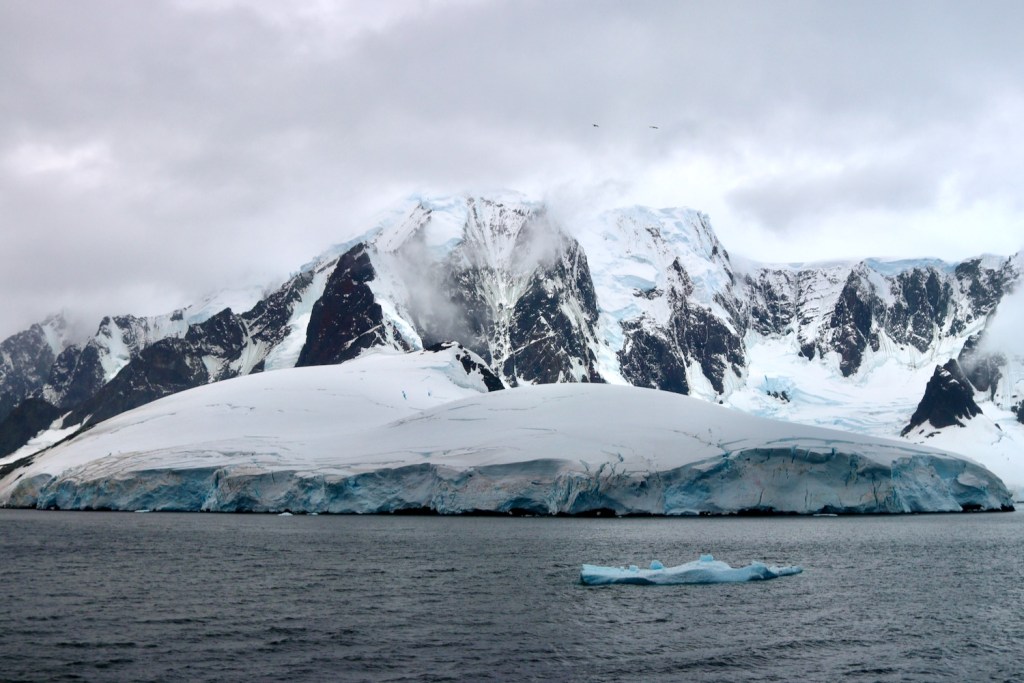
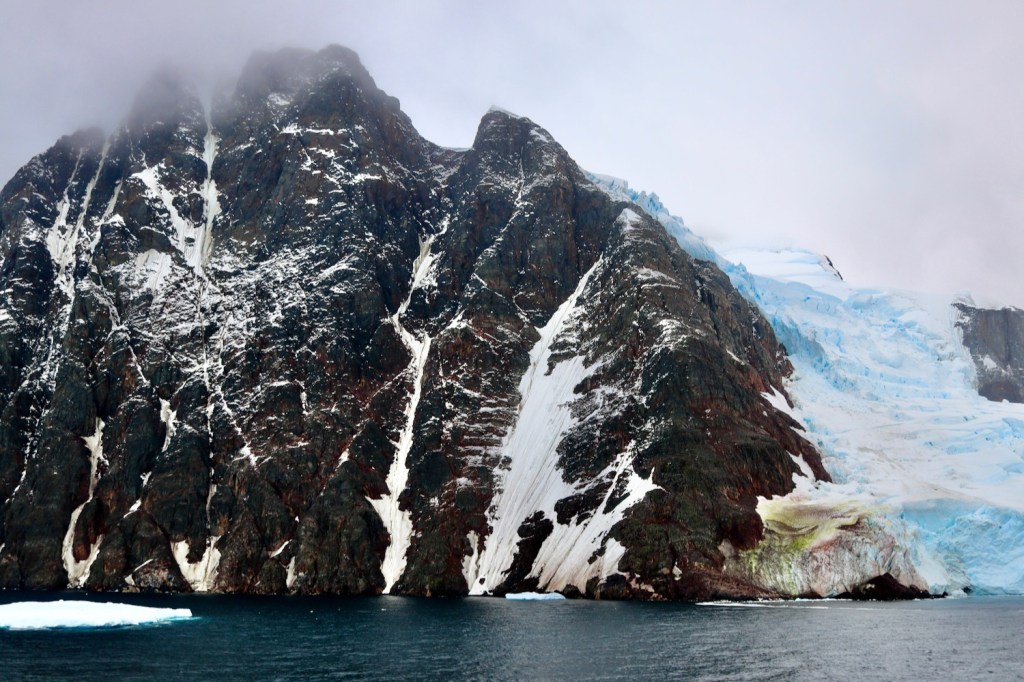
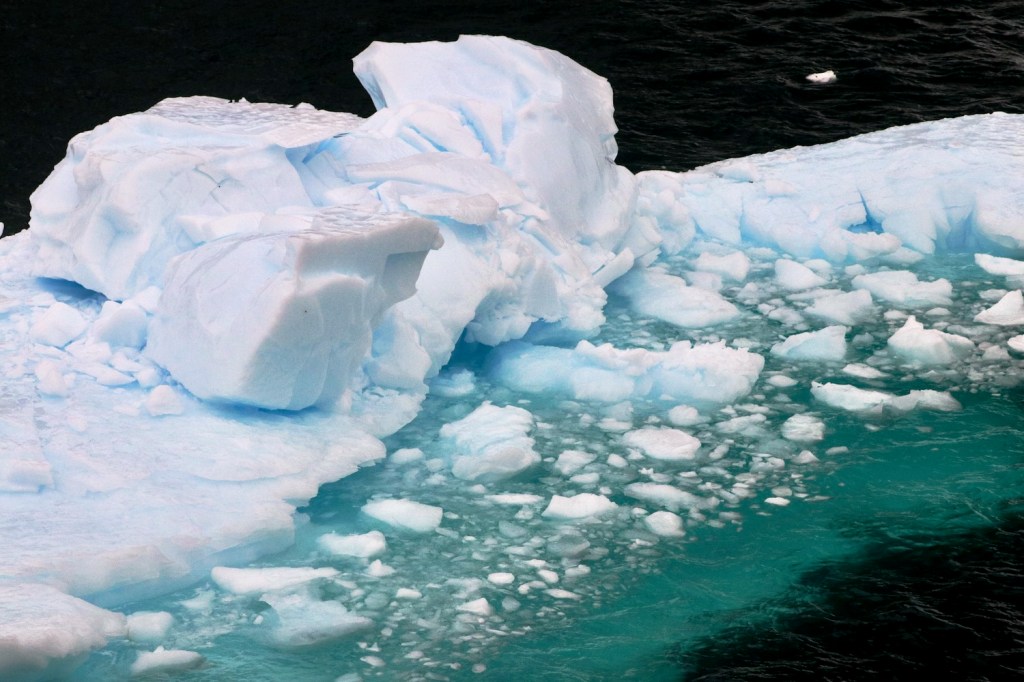
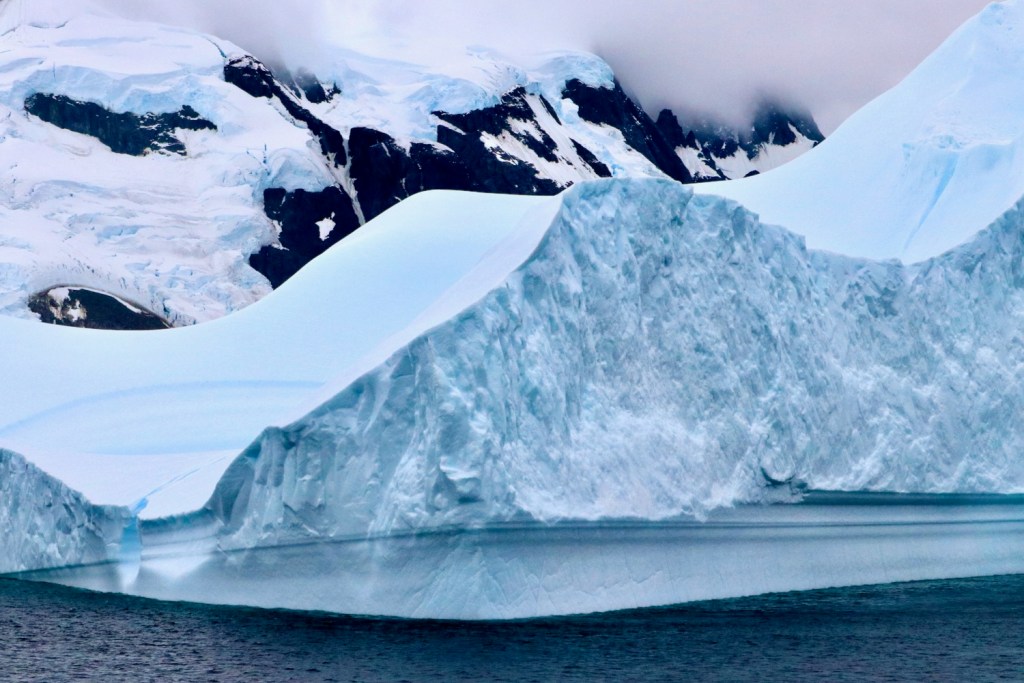
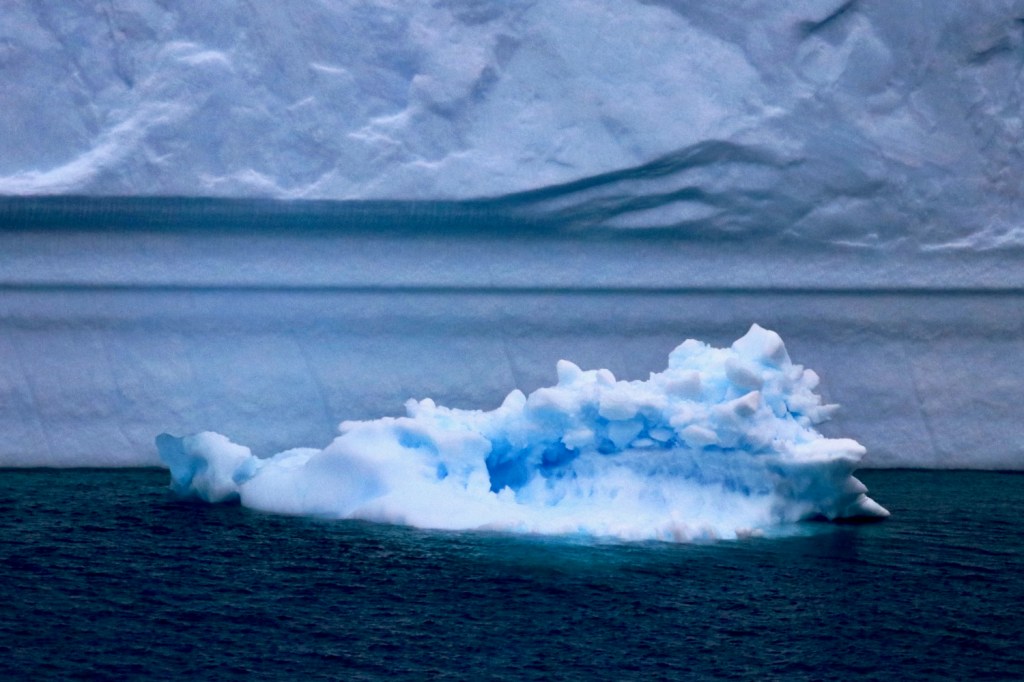
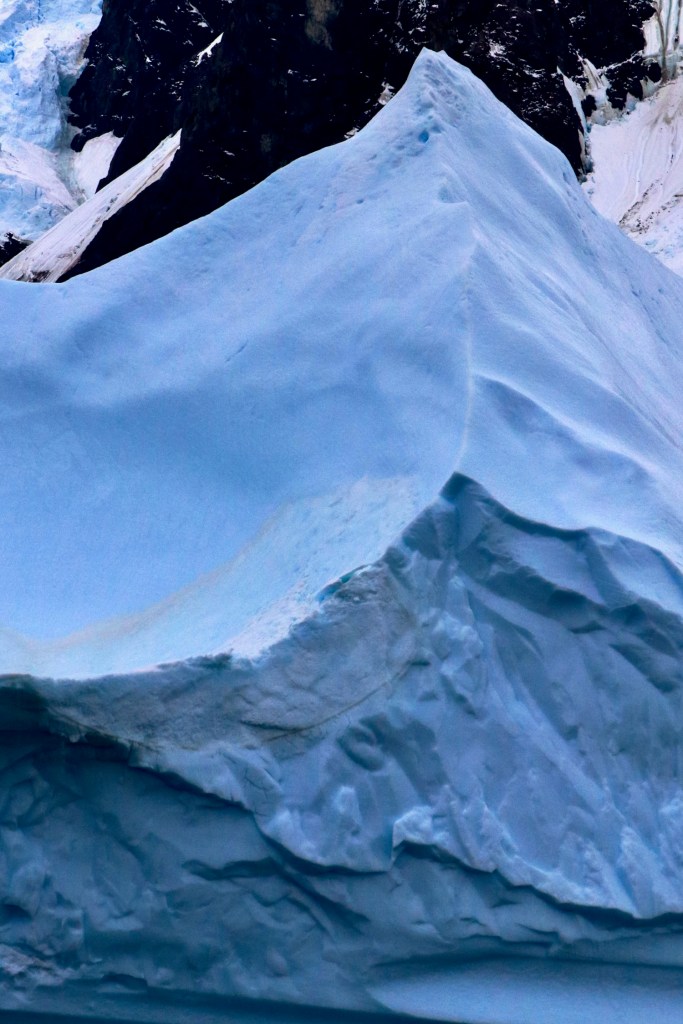
Mountains and a lot of snow were on either side of us, and in front were giant icebergs. Straight ahead.
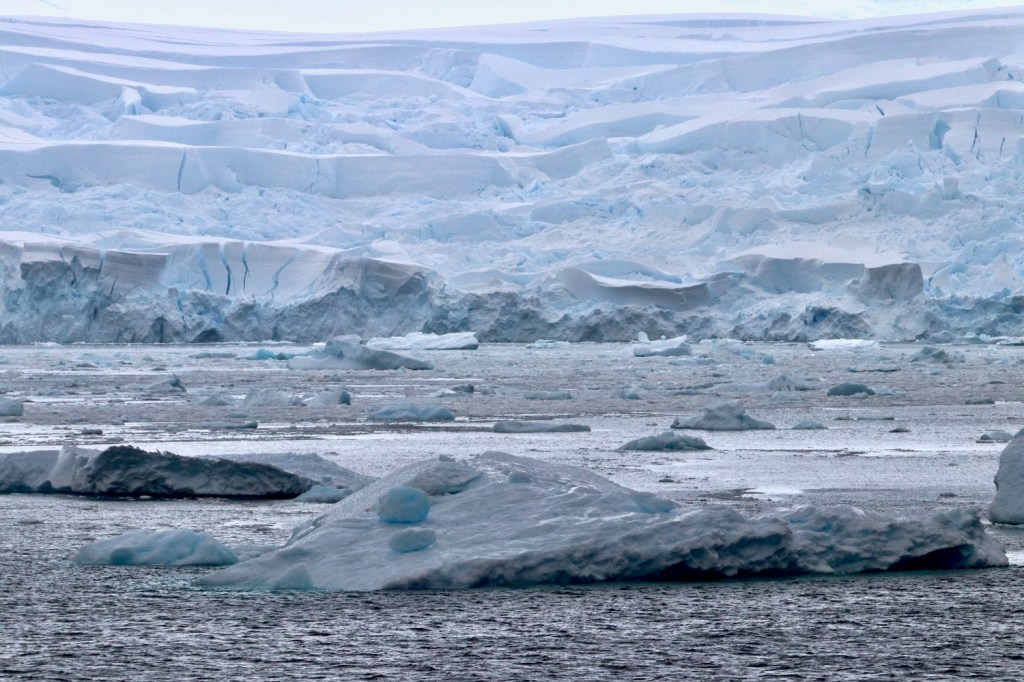
One of these icebergs was so big that its presence in the middle of the channel raised the possibility that we might not get through.
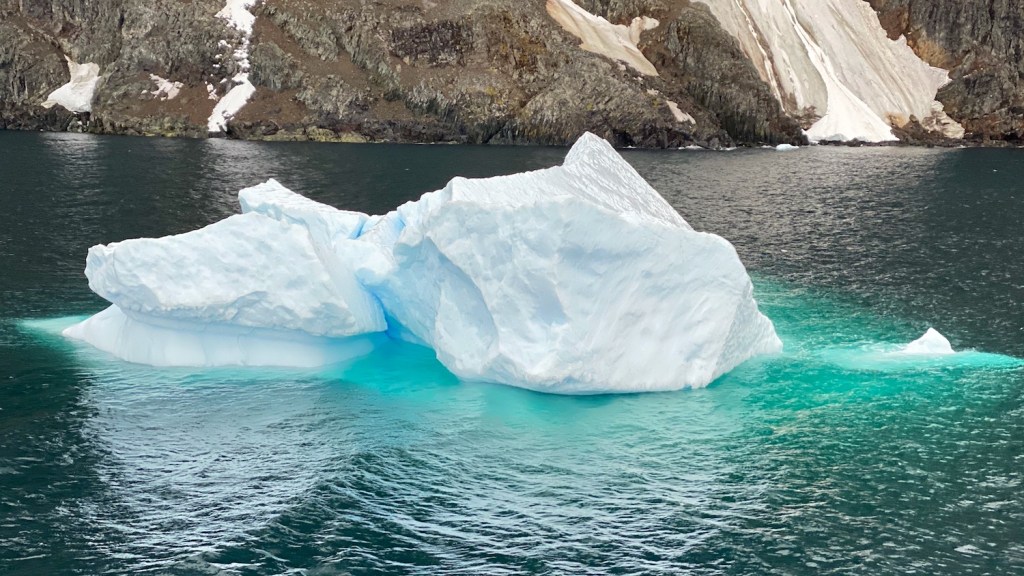
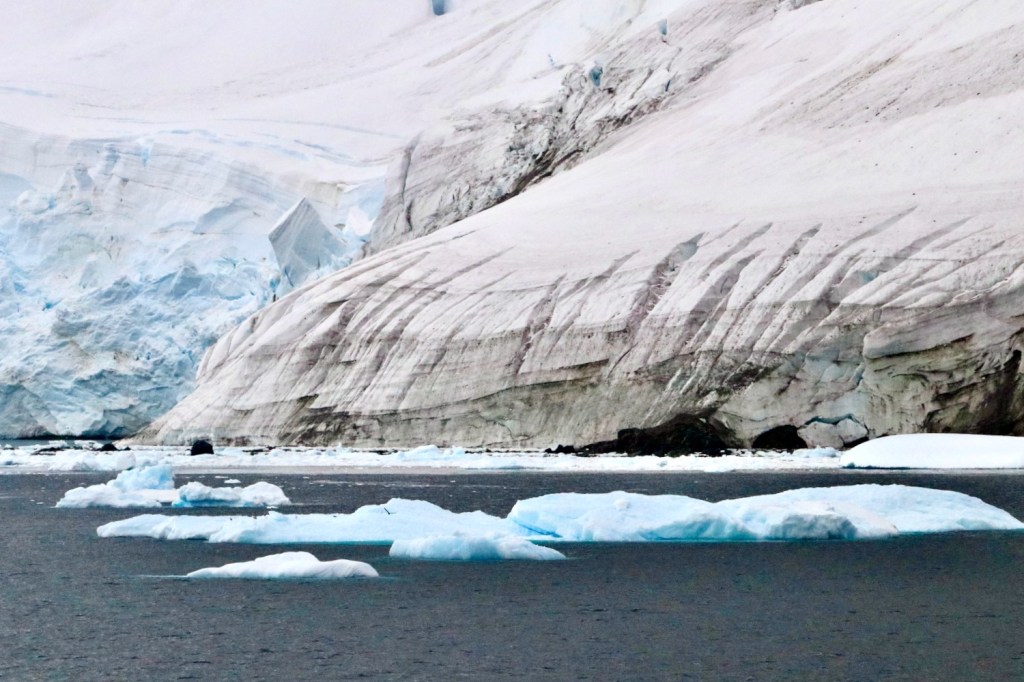
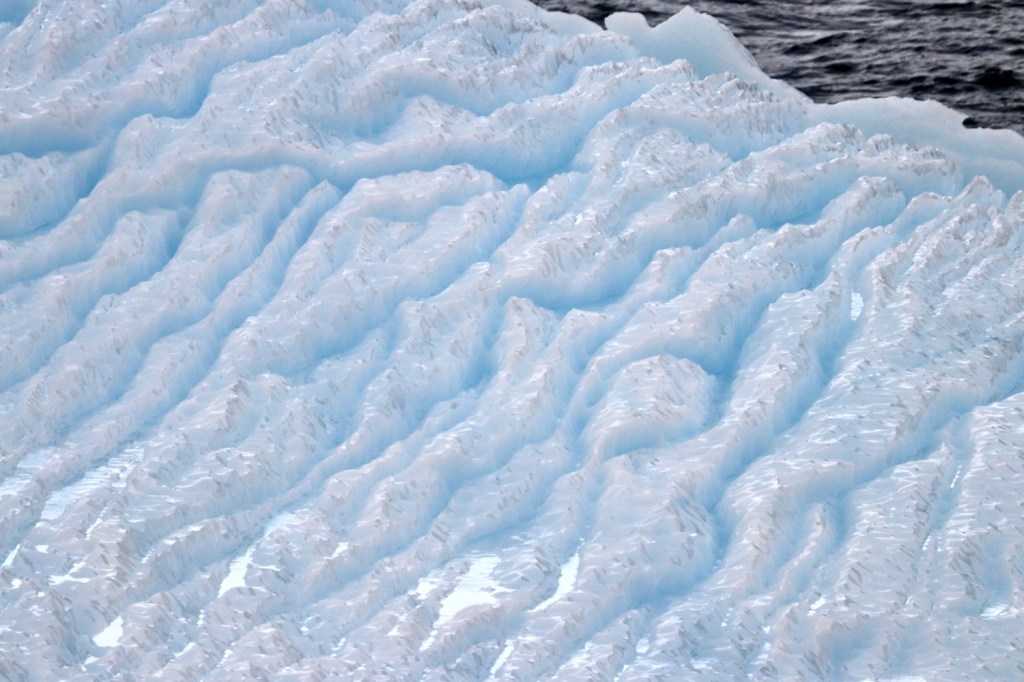
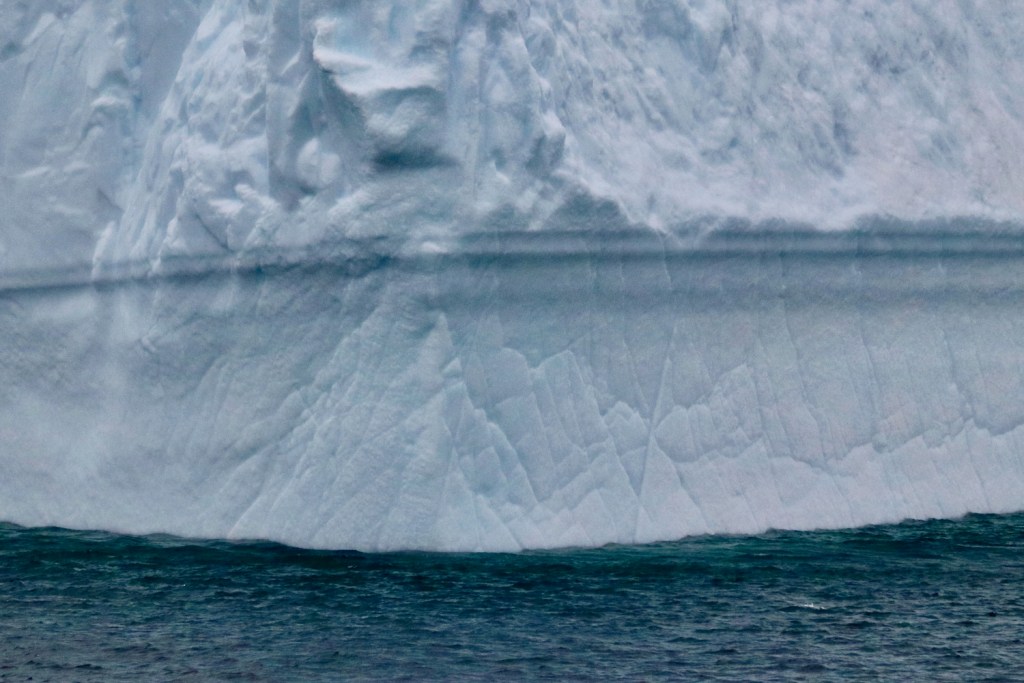
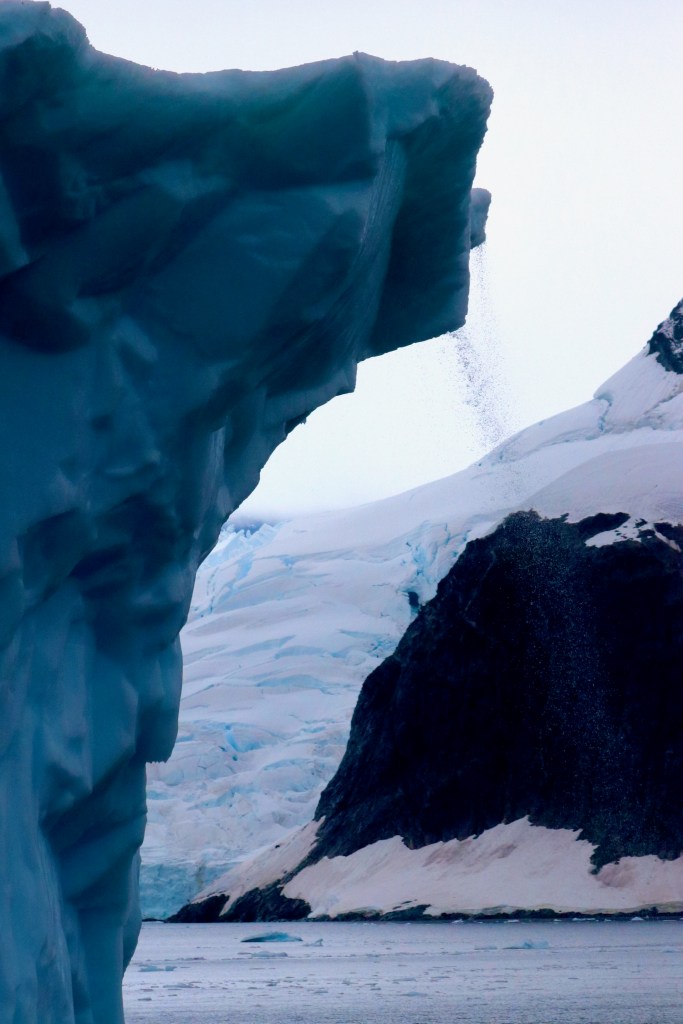
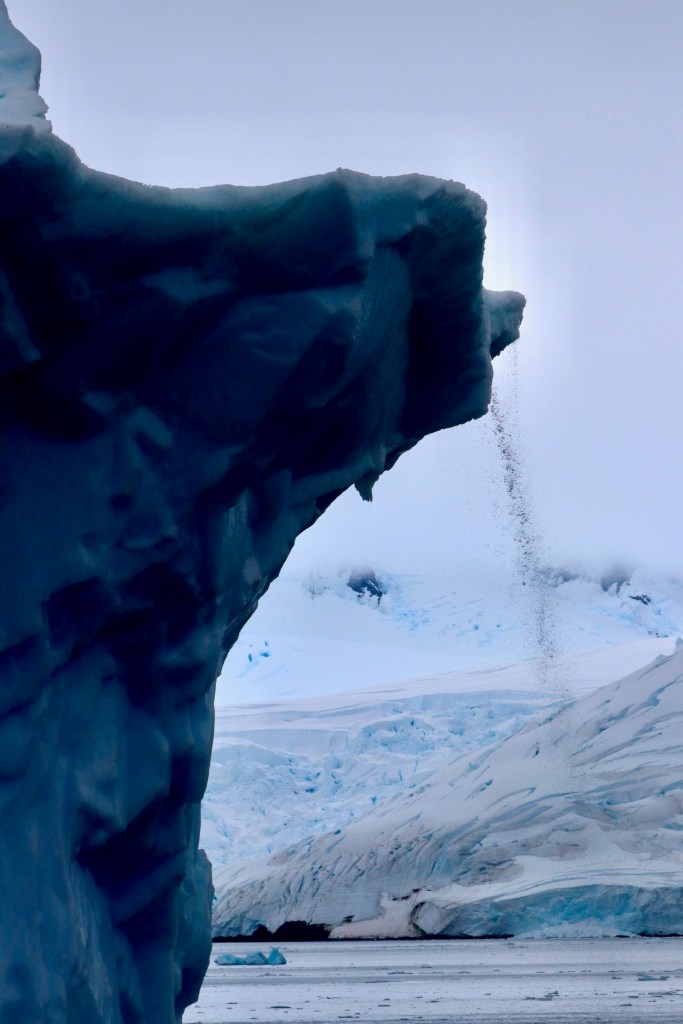
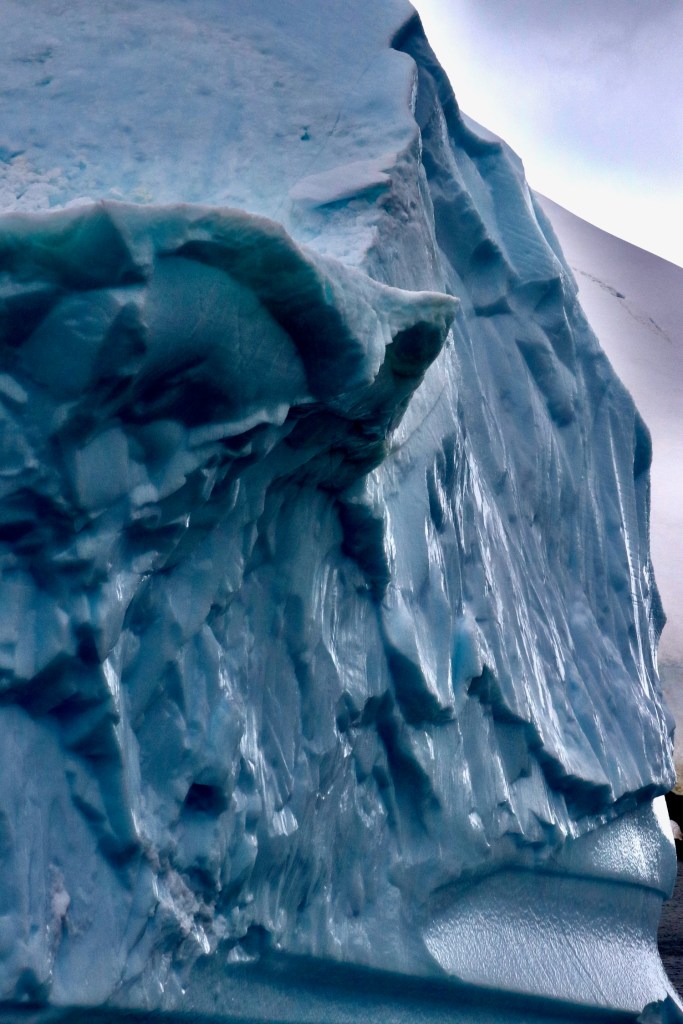
Luckily, we were able to. The photos don’t really do it justice but the mix of textures on this huge block of ice were beautiful — sometimes smooth, sometimes ridged.
It even had its own waterfall.
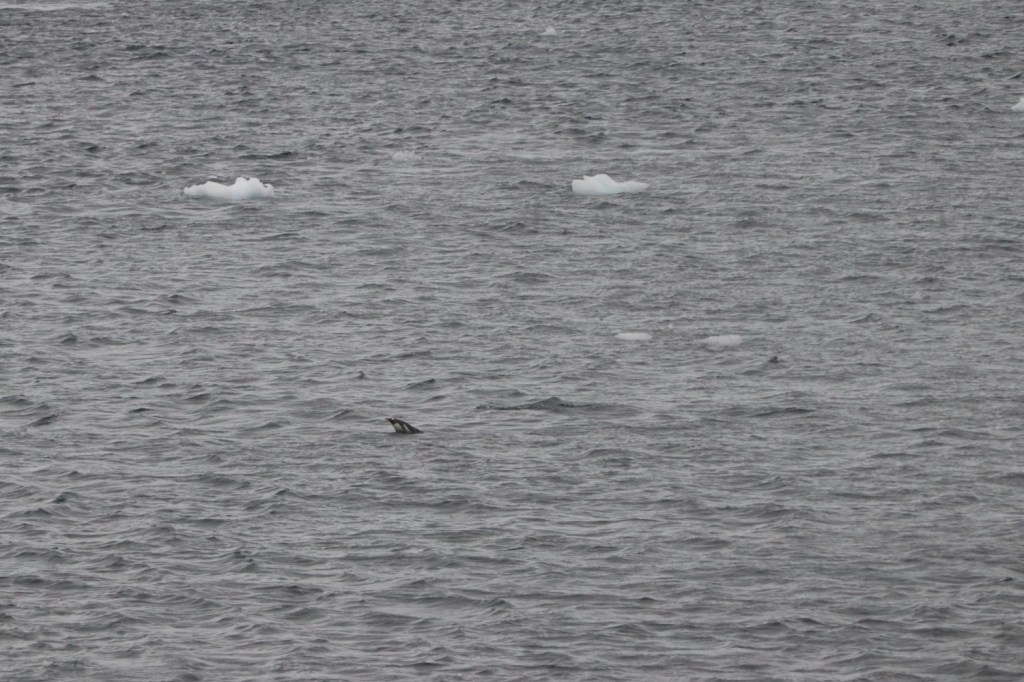
Penguins porpoised in and out of the water in front of and beside the boat, and a pod of Minke Whales also kept us company for a while.
Once through the Lemaire Channel, we headed for Vernadsky Station.
Vernadsky Station
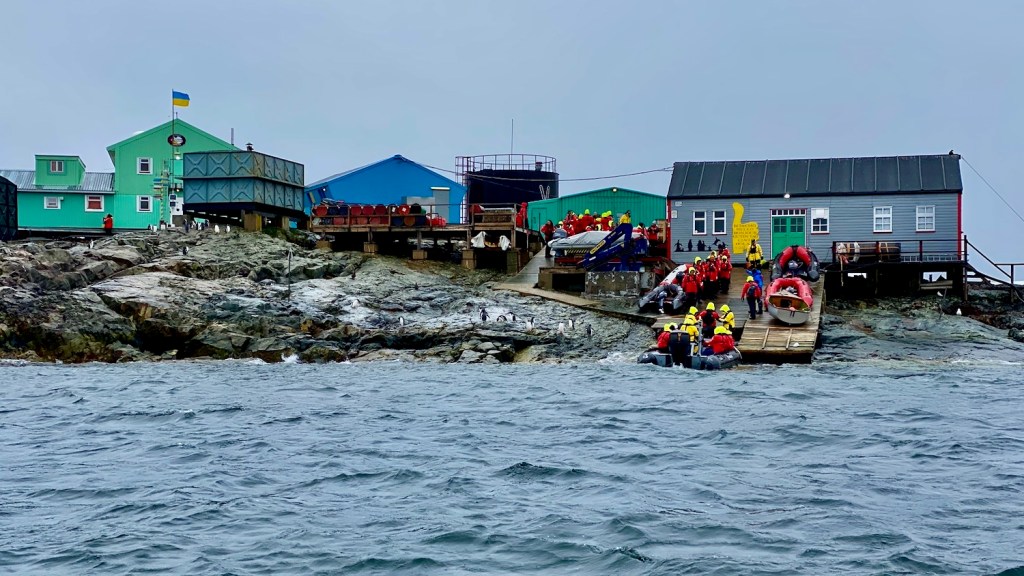
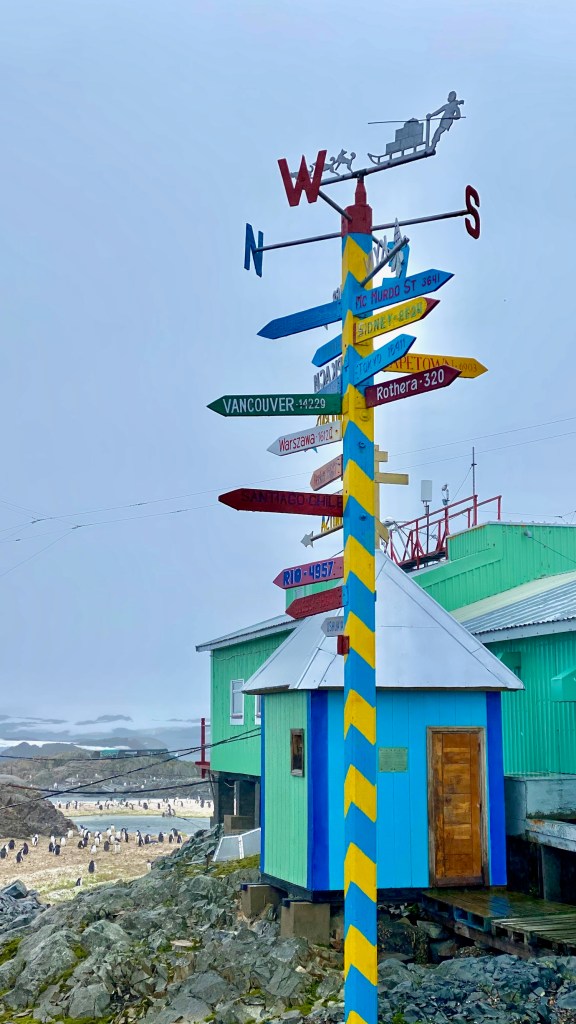
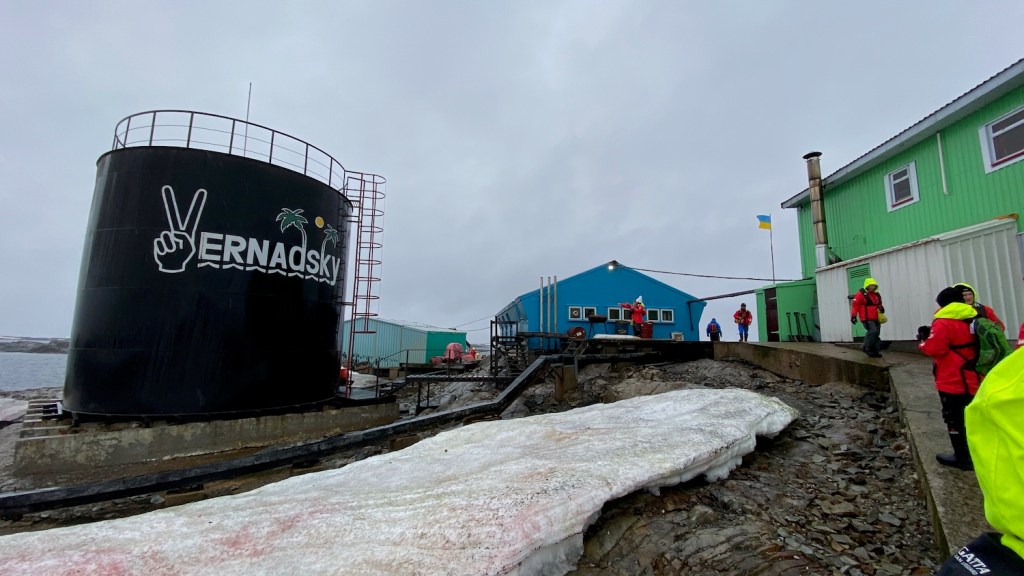
Once a British research station and later sold to the Ukrainian’s for £1, Vernadsky Station is on a 1 km2 island where they conduct biological and meteorological research.
Twelve people live at the station — 6 scientists, 6 support staff — and they spend a year there, receiving enough supplies in April to last them 12 months.
Between April and November they see no one but those same 12 faces — and then when the tourist season starts they get a flood of visitors.
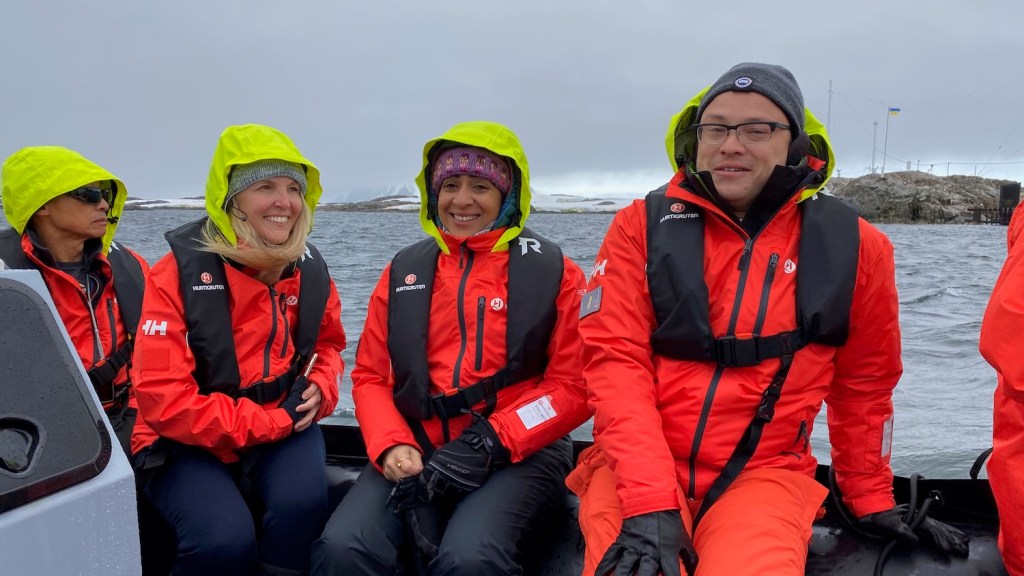
After breakfast, we hung out in our room until 10:30am when we were called to go out on the zodiac for our landing.
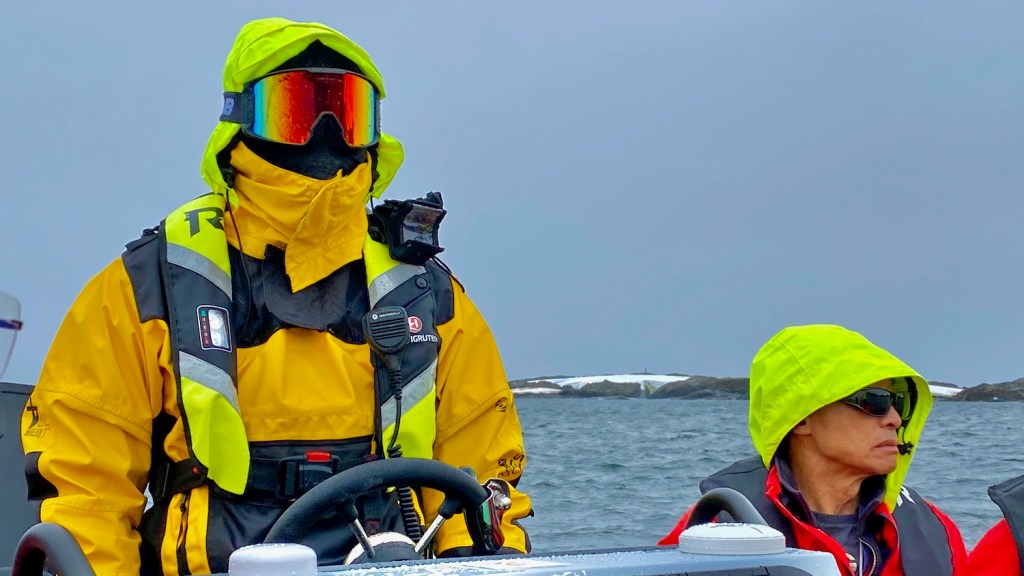
It was raining and the seas were a bit rough. I loved the wild nature of it but Glen looked like he was going to die any second.
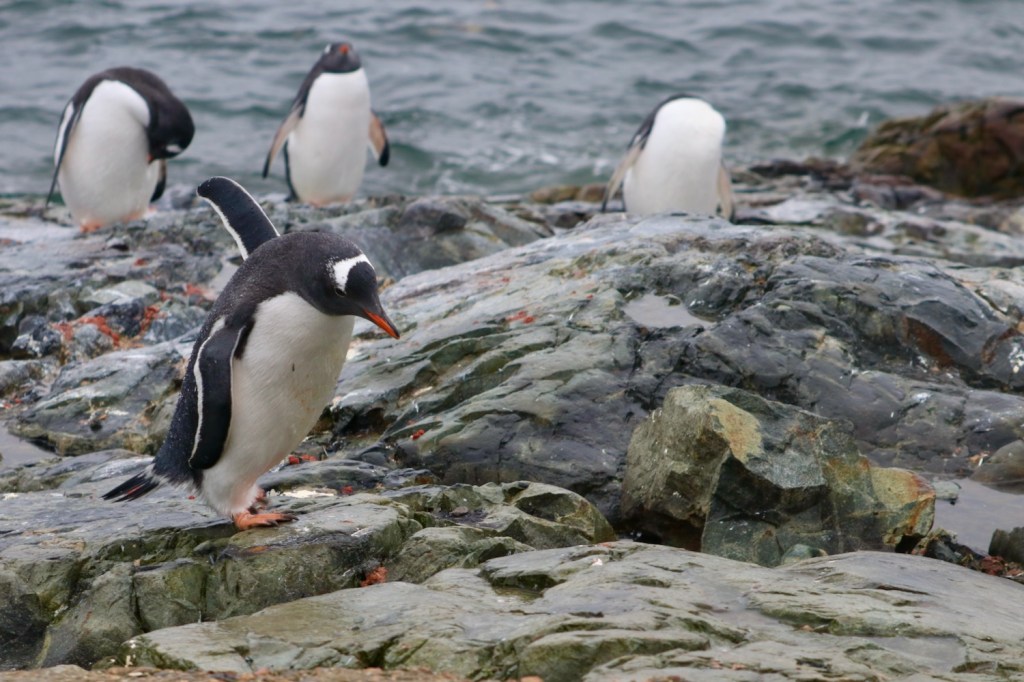
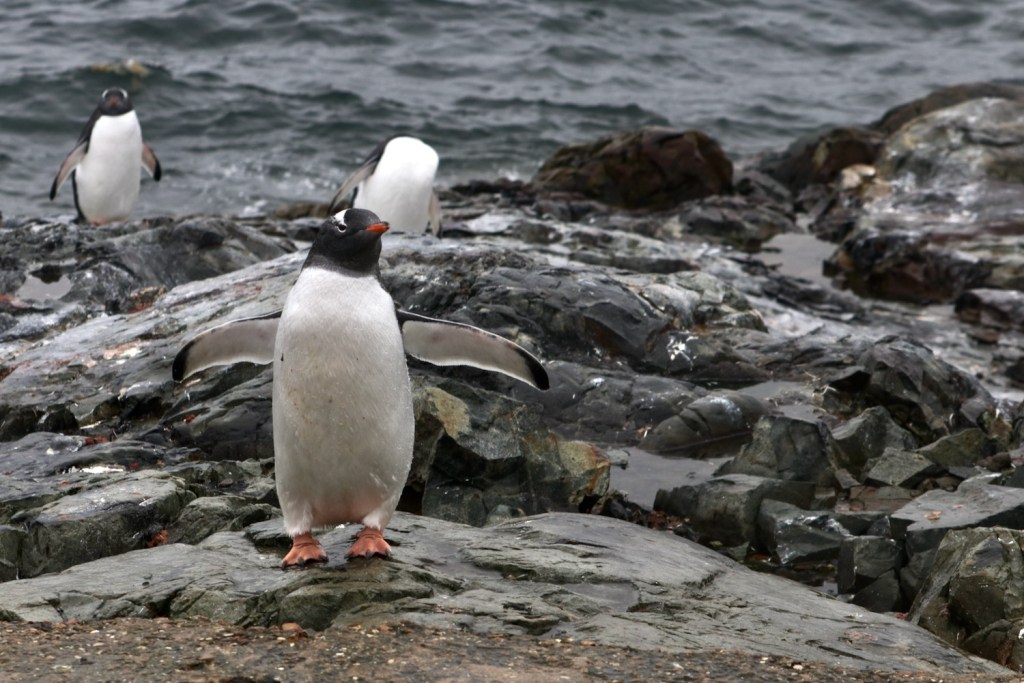
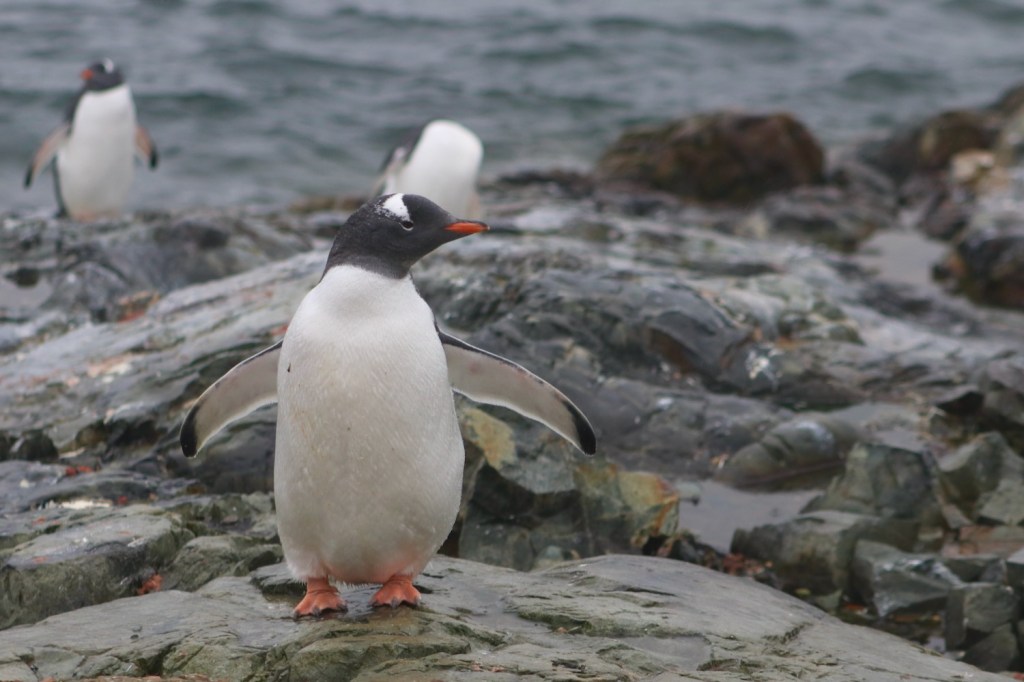
We pulled up to the boat ramp, greeted by our expedition staff but also a lot of Gentoo Penguins and Skua.
Up the slippery slope to the research station, we were met by a Ukrainian who gave us a tour, 16 people at a time, through the station.
Talk about isolated! They had a gym though, badly stocked as it was, so maybe it would be too bad to be there for a year.
(I did, however, get inspiration for some sort of homicidal maniac/monster from the wild thriller story that wouldn’t end well for anyone.)
The station itself is 1970s-chic and looks like it could do with an upgrade, but they seem to make do with what they have.
Postcards, pins, and vodka
The big draw for tourists (apart from seeing a working station) is to go the world’s southernmost souvenir store and bar.
The Ukrainian’s distil their own vodka from sugar and sell it in the bar (we shared one shot between four of us because it was strong and not all that pleasant if you’re not used to it).
They also operate a postal service. Glen and I wrote a bunch of postcards back on the boat in preparation for this landing and then had them stamped.
I’m not quite sure how they’re supposed to get to their destination considering the only visitors they get are cruise ships.
I suspect they stamp the postcards then give the postcards to the cruise ship operators to post when they return to South America or wherever.
Still, the novelty is the main thing.
And then there’s the tourist shop that sells badges and knick-knacks and pins. We bought some pins.
And if you’re wondering, they accept US dollars, British pounds, and Euros. No credit cards so bring cash.
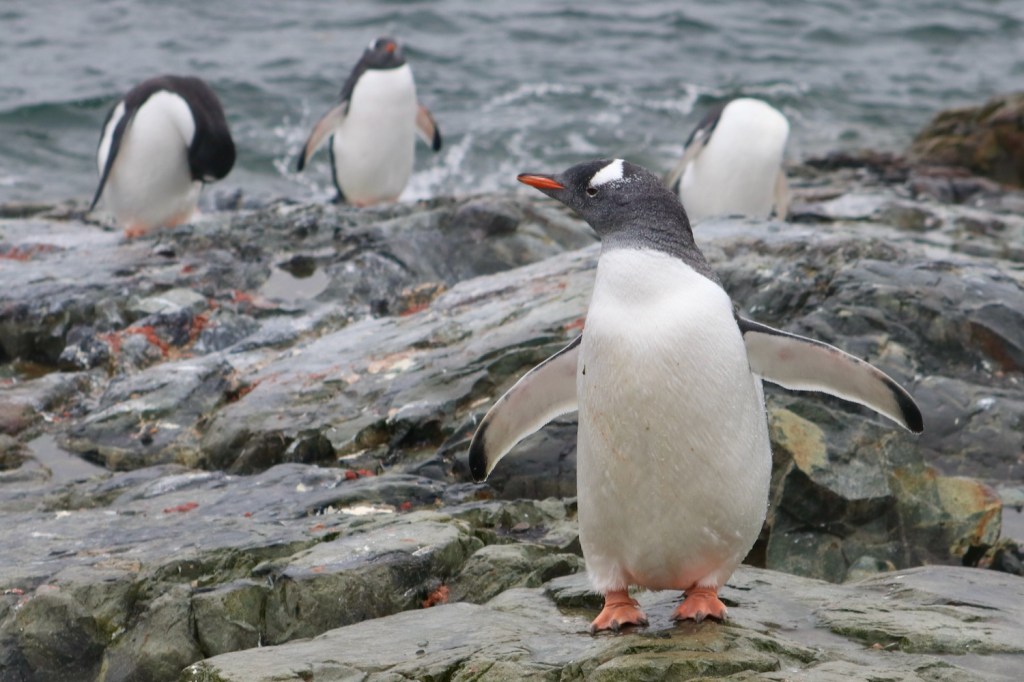
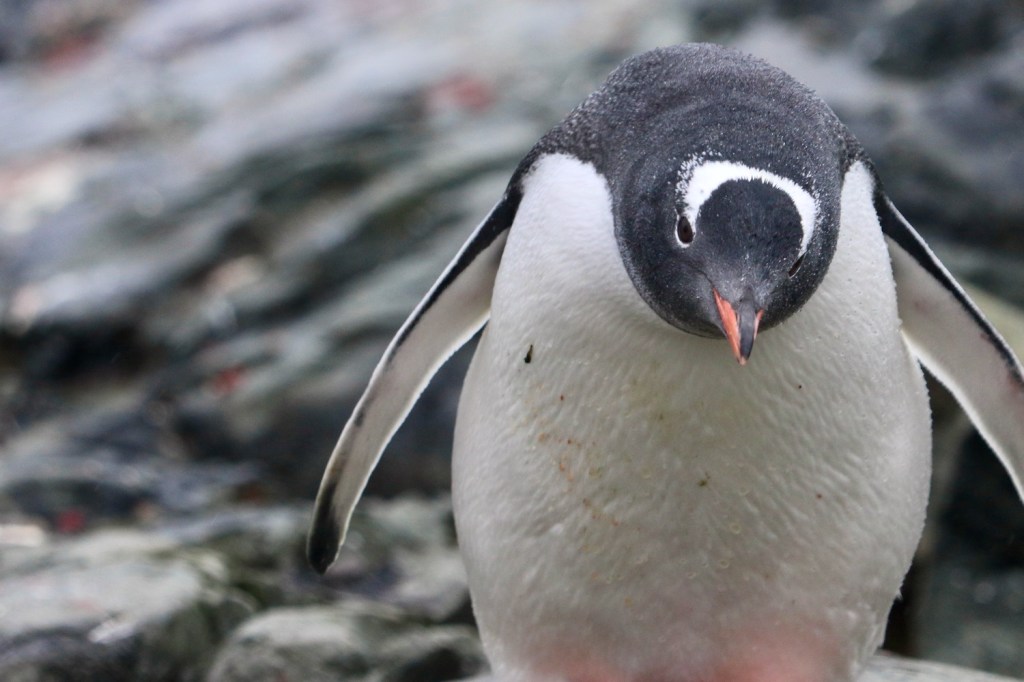
We then took some more photos outside, including of the Gentoo Penguins on the shore. They weren’t fazed by us in the slightest.
Apparently, when the British were there, the island didn’t have many penguins because the British had dogs.
When pets were banned and the British left, the penguins returned and now about 4000 occupy this small island.
That idea tickled me, that the penguins had returned and they were gradually going to attack and push out the last of the human invaders.
We got back in our boat as the rain started to come down harder, arriving at lunchtime, in time for our next feeding.
(To give you an idea of how weather-dependent everything is here, the first kayak group of the day went out but the second got cancelled, and both science boats (one of which we were due to go out on) were cancelled too.)
An afternoon of learning
We hit the gym in the afternoon. We were meant to watch a lecture about the underwater behaviour of Antarctic whales but missed it.
I did, however, watch the lecture on life on an Antarctic station which was fascinating (and excellent fodder for stories).
The main messages I took home were:
- a 12-month contract usually ends up being 14 months because you have to do handover
- during the winter months nothing gets in or out so you have about 6–8 months where it’s just you and the 11 other people you’re with — and you often can’t go outside
- the scientists/researchers often don’t stay over winter but instead only come for the summer when you can actually go outside and do things
- winds reach up to 300 km/h
- there are duplicates of most buildings in case one of them burns down
- there’s a big celebration at Midwinter because it means the light is coming back
- morale and liveability changed once they started allowing women to live at the stations (and two of the stations allow children to overwinter as well which gives another boost — though hopefully as long as the kid isn’t annoying AF)
- and it seems like it would be an easy thing to go mad out there.
Two such stories the presenter talked about were:
- a doctor at an Argentinian station was told he wouldn’t be replaced at the end of his 12-month contract and would have to stay and do another 12 months. He burned down the station.
- at a Russian station one man stabbed another who kept telling him the endings of the books he was reading.
With that last one, I can just imagine him going through all the books on the station except one and, having warned the other guy, on pain of death, not to tell him the ending, the guy waits until the last five pages and tells him anyway. It’s not funny but it’s also funny.
I then high-tailed it to the end of the Classical Navigation workshop where we struggled to plot a point on a map using longitude and latitude.
We listened to some information about the next day’s activities (and our first actual landing on the Antarctic continent) before going to dinner.
We always need more food.


What do you say, eh?